
How Much Does Solar Panel Installation Cost in the UK 2026?
Thinking about making the green transition? Here's a full breakdown of what solar panel installation actually costs in the UK in 2026, by system size, panel type, and battery additions.
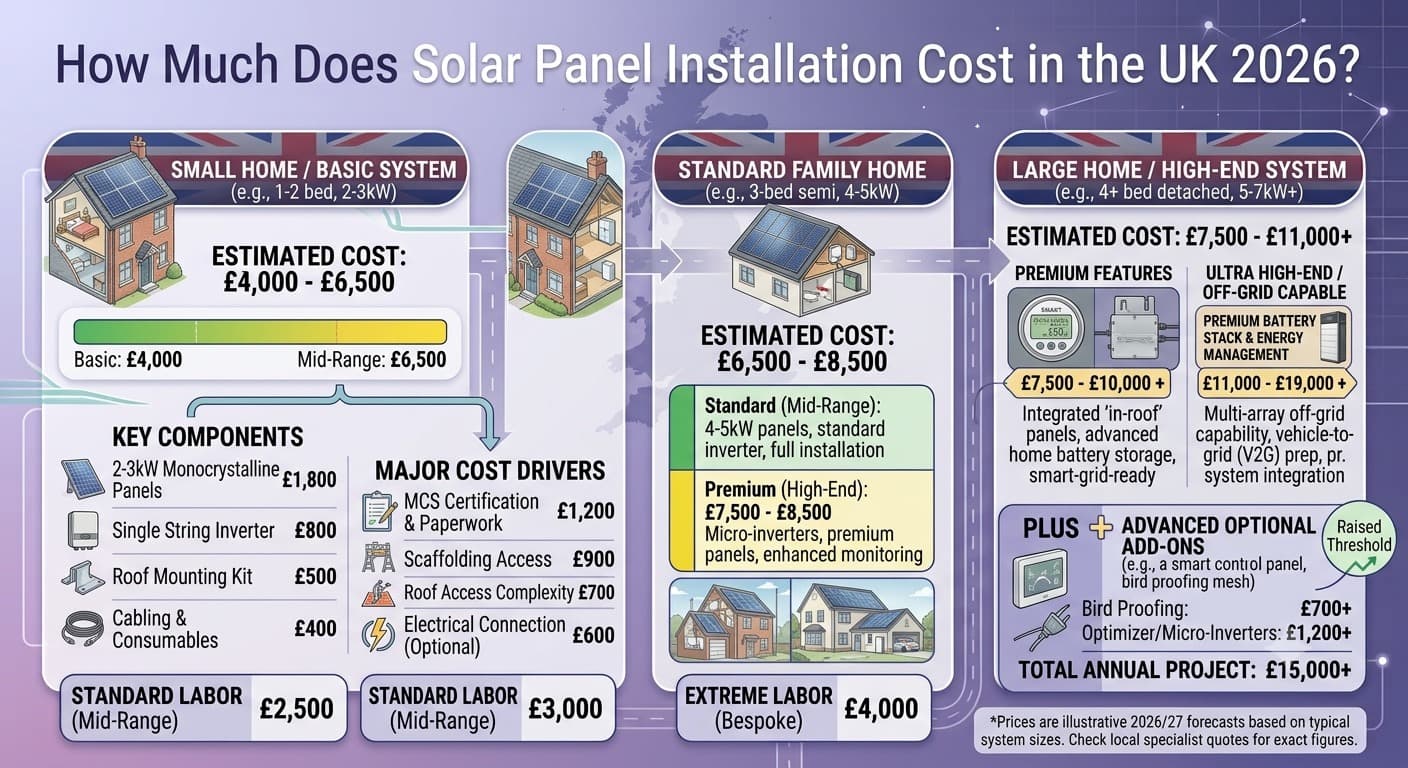
A fully installed residential solar panel system in the UK typically costs between £5,000 and £9,000 in 2026, depending on system size. A standard 4kW system — the most common choice for UK homes — usually costs £6,000–£8,500, while adding battery storage brings the total to roughly £9,000–£14,000. Prices benefit from 0% VAT on solar panels and batteries, which remains in place until 31 March 2027.
Solar panel costs have fallen significantly over the past decade, and with electricity prices still historically high, many UK homeowners are finding the payback period has shortened too.
The Short Version: Solar Panel Costs by System Size
| System Size | Typical Cost (Panels Only, 2026) | Best Suited To |
|---|---|---|
| 2.1kWp (6 panels) | £4,000 | 1–2 bedroom homes |
| 3–3.5kWp (10 panels) | £5,500–£7,000 | Small–medium 3-bedroom homes |
| 4kW (10–12 panels) | £6,000–£8,500 | Most common size for UK households |
| 5–5.5kW (16 panels) | £7,500–£9,500 | Larger homes, EV owners, higher usage |
Add a battery, and total costs rise to roughly £9,000–£14,000 for a typical 4kW system paired with a mid-size battery, depending on capacity and brand.
What Determines the Cost of Your Solar Panel Installation
- 1. System Size (kWp): Cost scales fairly closely with system size. Based on 2026 MCS installation data, the average cost across registered domestic installs works out to roughly £1,686 per kW. A 4kW system at this rate lands around £6,700, which lines up closely with the quoted market range.
- 2. Panel Type: Premium monocrystalline panels cost more per kW than standard polycrystalline panels, thanks to higher efficiency and typically longer warranties — some premium ranges can add £2,000 or more to a system's total cost. Standard polycrystalline panels remain the most cost-effective choice for most homes.
- 3. Roof Type and Installation Complexity: Roof pitch, height, orientation, and shading all affect labour costs. Homes needing scaffolding, working at height, or dealing with unusual roof shapes will typically see higher installation costs than a straightforward, easily accessible pitched roof.
- 4. Inverter Choice: The inverter converts the DC electricity your panels generate into usable AC electricity for your home. Higher-spec inverters, including hybrid inverters designed to work with batteries, add to the upfront cost but can improve efficiency and future-proof the system for battery addition later.
- 5. Battery Storage: Adding battery storage is optional but increasingly popular, since it lets you store surplus solar electricity for use in the evening rather than exporting it cheaply.
Typical Battery Installed Costs (2026)
| Battery Capacity | Typical Installed Cost |
|---|---|
| 5kWh | £3,000–£5,500 |
| 10kWh | £5,000–£8,500 |
| 13.5kWh (e.g. Tesla Powerwall 3) | £7,500–£10,500 |
Typical Cost Breakdown for a Standard 4kW System
| Component | Approximate Share of Total Cost |
|---|---|
| Hardware (panels, inverter) | ~45% |
| Labour and installation | ~30% |
| Scaffolding, MCS certification, admin | ~25% |
This split explains why roof complexity and scaffolding needs can move the final price noticeably, even when two homes choose identical panels.
Should You Add a Battery Now or Later?
Adding a battery at the same time as your panels is usually cheaper than retrofitting one afterwards. A retrofit battery for an existing solar system typically costs £3,000–£10,500 fully installed, but expect to pay £500–£1,000 more than fitting it alongside the panels, since a retrofit requires a separate site visit, additional wiring, and a fresh network notification. If you're still at the planning stage, it's generally more cost-effective to bundle panels and battery into a single installation.
VAT, Incentives, and Support Schemes
- 0% VAT: Applies to solar panels and battery storage installed in residential properties in the UK until 31 March 2027, saving 20% instantly compared with standard-rated home improvements.
- The Smart Export Guarantee (SEG): Requires energy suppliers with more than 150,000 customers to pay you for electricity you export to the grid. Standard rates sit around 4p–5p per kWh, while premium tariffs from some suppliers can pay 15p–29p per kWh, particularly if you also have a battery.
- ECO4 and the Warm Homes Plan: May fund solar installation for eligible low-income households or homes with poor energy efficiency ratings (EPC bands E, F, or G), including 0% loan options in some cases.
How Long Is the Payback Period?
Most UK solar installations pay for themselves in roughly 6–10 years, depending on your system size, electricity usage patterns, and export tariff. Payback tends to be fastest for households that:
- Use a significant share of their electricity during daylight hours.
- Have an unshaded, well-oriented roof.
- Add a battery and shift usage to solar hours or cheap off-peak charging.
- Choose a premium Smart Export Guarantee tariff.
After the payback period, solar electricity effectively becomes free, and any exported surplus continues to earn money through the SEG.
Worked Example: 4kW System for a Typical 3-Bedroom Home
- Panels and inverter, fully installed: approximately £6,500 (mid-range of the £6,000–£8,500 bracket).
- Optional 5kWh battery added at the same time: approximately +£3,500.
- Total installed cost: approximately £10,000.
- 0% VAT applied: no additional 20% on top.
- Estimated payback period: roughly 7–9 years, depending on usage and export tariff.
How to Get the Best Solar Panel Quote
- Get at least three quotes from MCS-accredited installers to compare hardware, labour, and scaffolding costs separately.
- Match system size to usage, not roof space — oversizing a system beyond your consumption patterns can extend payback unnecessarily unless you plan to add an EV or heat pump.
- Ask whether scaffolding is included in the quoted price, since this is one of the most common places for hidden costs to appear.
- Compare battery options carefully — capacity, brand, and whether it's DC or AC-coupled all affect both price and long-term performance.
- Check your export tariff options before committing to a supplier, since SEG rates vary significantly between providers.
Planning Your Solar Budget
Because solar panel costs vary by system size, roof complexity, and battery choice, the ranges above are a starting point rather than a fixed quote. To get a more tailored estimate based on your roof size and electricity usage, try CalZone's solar panel cost calculator — part of a wider set of free UK energy and property calculators available at calzone.co, covering everything from battery storage sizing to loft insulation and other home energy upgrades.
This guide reflects general UK solar panel and battery price ranges observed across the market in 2026, based on MCS installation data and industry sources. Actual costs depend on your roof, location, chosen equipment, and installer. It's provided for general information only and doesn't constitute a fixed quote — always get itemised quotes from MCS-accredited installers before committing to a project.
Common Questions
How much does solar panel installation cost in the UK in 2026?
A fully installed residential solar system costs between £5,000 and £9,000 in 2026, depending on system size. A standard 4kW system, the most common choice for UK homes, typically costs £6,000–£8,500.
How much does a solar battery cost in the UK?
Solar battery prices in 2026 typically range from £3,000–£5,500 for a 5kWh battery, up to £7,500–£10,500 for a larger 13.5kWh unit such as a Tesla Powerwall 3, fully installed.
How much does solar panels and a battery cost together?
A combined solar panel and battery system for an average UK home typically costs £9,000–£14,000 in 2026, depending on system size and battery capacity.
Is it cheaper to add a battery later or install it with the panels?
Installing a battery at the same time as your panels is usually cheaper. Retrofitting a battery afterwards typically costs £500–£1,000 more, since it requires a separate installer visit, extra wiring, and a new network notification.
Do I still pay VAT on solar panels in the UK?
No. 0% VAT applies to solar panels and battery storage installed in UK residential properties, and this remains in place until 31 March 2027.
How long does it take for solar panels to pay for themselves?
Most UK solar installations have a payback period of roughly 6–10 years, depending on system size, how much electricity you use during daylight hours, and your Smart Export Guarantee tariff.
Written by Sulzax
Expert writer and contributor at CalZone, specialized in creating accurate tools and simple guidelines for UK readers.
iSources & References
Solar Panel Cost Calculator UK
Want to calculate the exact cost, payback period, and savings for your property? Use our free Solar Panel Cost Calculator UK.
Open Calculator FreeExplore CalZone's Free Specialist Calculators
Plan your finances, property renovations, health goals, and daily commute with our 300+ free UK tools.