
Inheritance Tax UK: How Much Will You Pay?
UK inheritance tax explained: the nil-rate band, residence nil-rate band, the 40% rate, gift rules and a worked example.
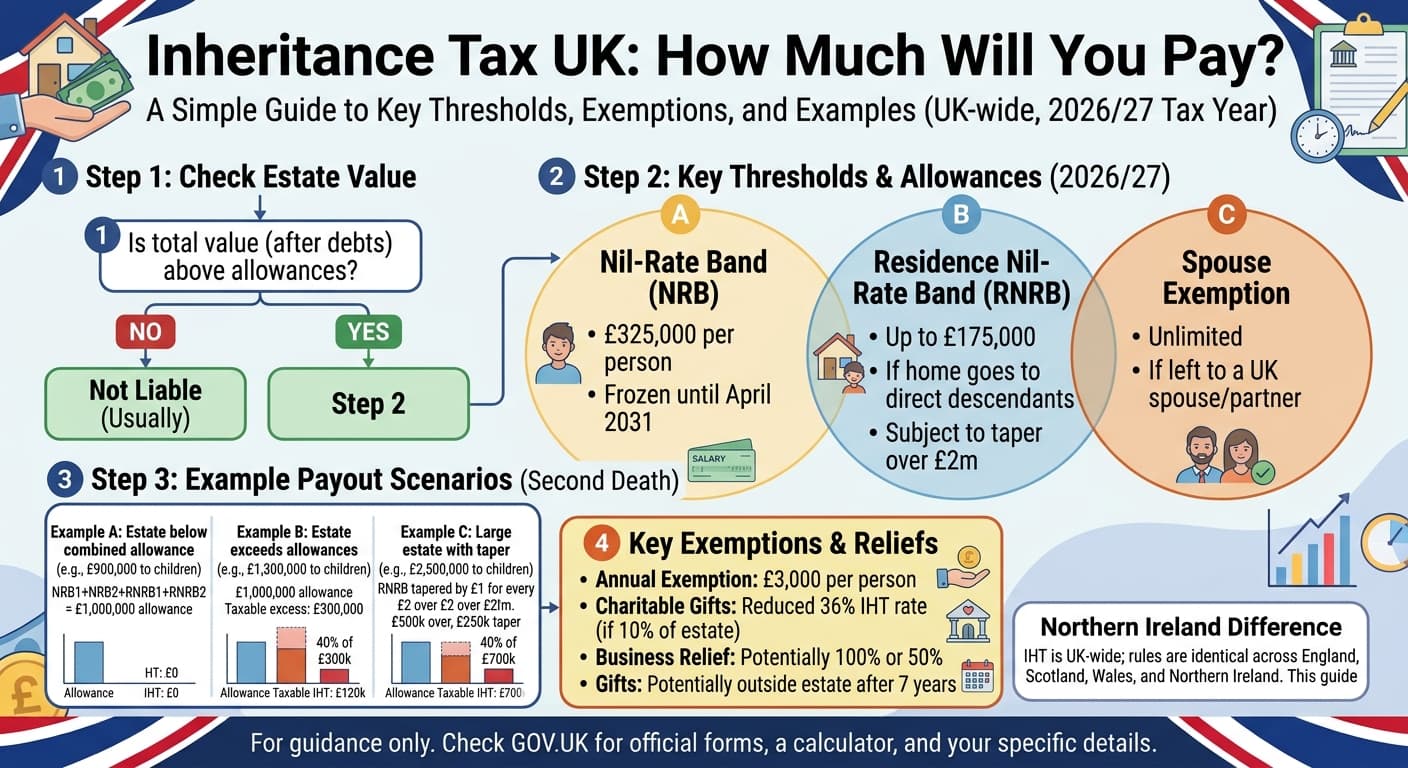
Inheritance tax (IHT) is charged on the value of an estate above certain thresholds when someone dies. Many families will pay nothing, but rising property values mean more estates are close to the limits. Here is how the basics work.
The nil-rate band
Every individual has a nil-rate band of £325,000. Any part of the estate within this amount is taxed at 0%. Anything above it is generally taxed at 40%. This threshold has been frozen for several years.
The residence nil-rate band
If you leave your home to direct descendants such as children or grandchildren, an extra residence nil-rate band of up to £175,000 may apply. It is reduced by £1 for every £2 that the estate exceeds £2 million, so larger estates may lose it entirely.
Passing everything to a spouse
Assets left to a UK-domiciled spouse or civil partner are generally exempt from inheritance tax. Any unused nil-rate band can be transferred to the surviving partner, so a couple can potentially pass on up to £650,000, or up to £1 million including both residence bands, before tax applies.
Worked example
Suppose an estate of £800,000 includes a home passed to children. The nil-rate band is £325,000 and the residence nil-rate band is £175,000, totalling £500,000 of tax-free allowance.
Taxable estate: £800,000 - £500,000 = £300,000. Inheritance tax at 40% = £120,000.
Run your own scenario in the Inheritance Tax Calculator UK.
Gifts and the seven-year rule
Gifts made more than seven years before death are usually outside the estate. Gifts made within seven years can be taxed, with a sliding scale of relief after three years. Regular gifts out of surplus income and small annual gifts are among the exemptions that may apply.
When to get advice
Trusts, business assets, pensions, overseas property and charitable giving can all change the result. Rules and thresholds change, so check GOV.UK and speak to a solicitor or regulated financial adviser before making plans.
Frequently Asked Questions
What is the inheritance tax rate?
The standard rate is 40% on the value of an estate above the available tax-free allowances.
Do I pay inheritance tax on a gift to my spouse?
Transfers to a UK-domiciled spouse or civil partner are generally exempt.
What is the residence nil-rate band?
An additional allowance of up to £175,000 when a home is left to direct descendants, tapered for estates above £2 million.
Who pays inheritance tax?
It is normally paid from the estate by the executors before assets are distributed.
This article is for general information only and is not financial, legal or medical advice. Rules and figures change, so check the official sources below and speak to a qualified adviser for decisions that matter.
Written and reviewed by Sulzax, founder of CalZone
Sulzax builds and maintains CalZone's UK calculators and guides. Every formula is checked against published figures from HMRC, GOV.UK and the NHS, and tested with worked examples before publication. Found an error? Email info@thecalzone.co.uk.
iSources & References
Explore CalZone's Free Specialist Calculators
Plan your finances, property renovations, health goals, and daily commute with our 300+ free UK tools.