
Universal Credit UK: How Much Can You Get?
How Universal Credit is worked out: the standard allowance, extra elements, work allowance, the 55% taper and capital rules.
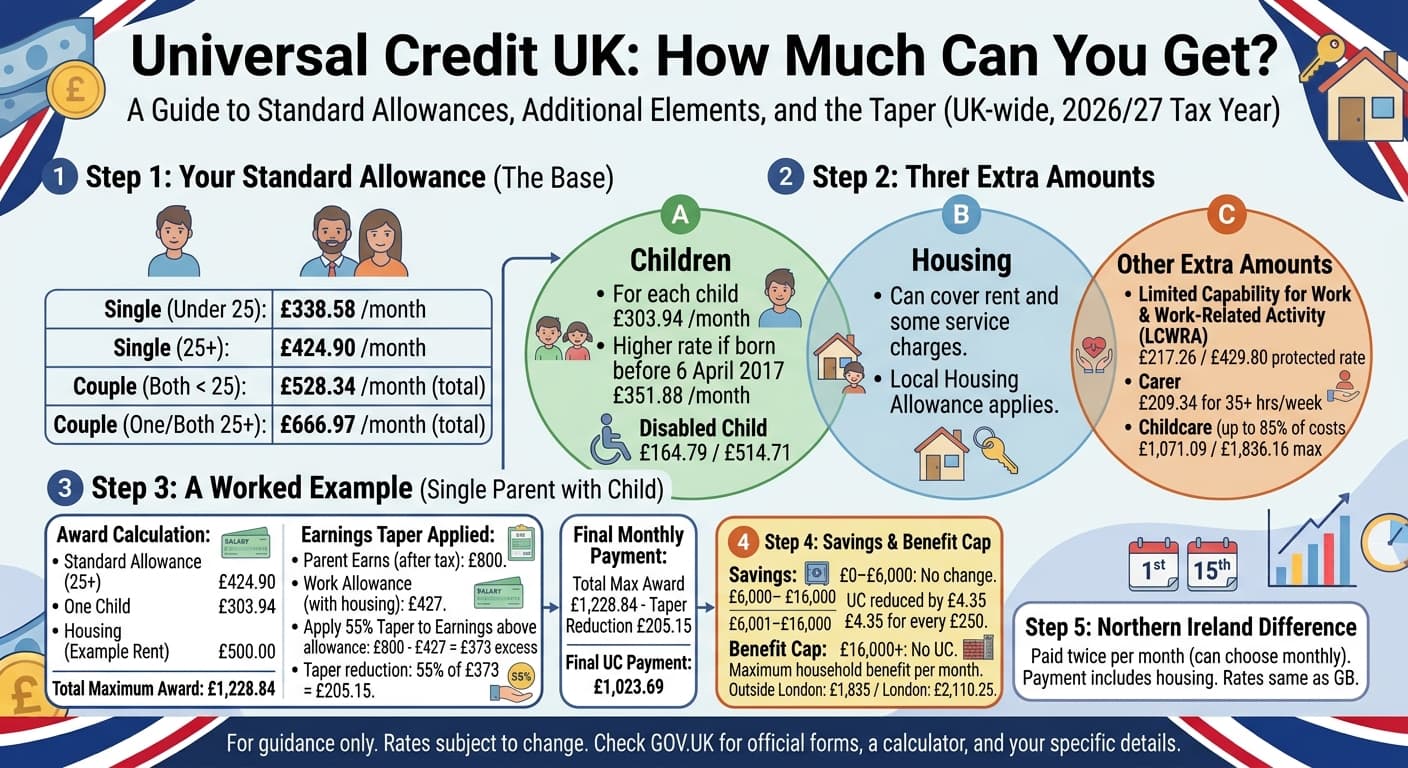
Universal Credit is a monthly payment for people on a low income or out of work. It combines several older benefits into one. The amount you receive depends on your household, your housing costs and how much you earn.
How the amount is built up
Your award starts with a standard allowance set by age and whether you are single or in a couple. Extra elements can be added for children, disability or caring responsibilities, and for housing costs if you rent. The total is your maximum monthly entitlement.
The work allowance and 55% taper
If you are working, your payment is reduced as your earnings rise. Some households have a work allowance, an amount you can earn before any reduction. Above that, your Universal Credit falls by 55 pence for every £1 of take-home pay.
Example: if your maximum award is £900 a month and you have a £400 work allowance with £1,000 take-home pay, the amount above the allowance is £600. Reduction = 55% x £600 = £330, so you would receive about £570 a month.
Try different earnings in the Universal Credit Calculator UK.
Savings and capital
Savings between £6,000 and £16,000 reduce your award, with each £250 above £6,000 treated as £4.35 of monthly income. If you have more than £16,000, you are normally not eligible.
Things that can change your payment
Reporting changes promptly matters, as do advance payments, sanctions and benefit deductions. Payments are assessed monthly, so a bonus or an extra pay date in one assessment period can reduce that month award.
Getting a proper check
A calculator can only give an estimate. Standard allowance rates are uprated every April, so check current figures on GOV.UK. A benefits adviser at Citizens Advice can run a full check and help you claim everything you are owed.
Frequently Asked Questions
What is the Universal Credit taper rate?
Your award is reduced by 55p for every £1 of take-home pay above any work allowance.
Does having savings affect Universal Credit?
Yes. Savings over £6,000 reduce your award and you are normally not eligible with more than £16,000.
How often is Universal Credit paid?
Once a month, based on your circumstances in the previous assessment period.
Where can I get a free benefits check?
Citizens Advice and other free advice services can help you check your entitlement.
This article is for general information only and is not financial, legal or medical advice. Rules and figures change, so check the official sources below and speak to a qualified adviser for decisions that matter.
Written and reviewed by Sulzax, founder of CalZone
Sulzax builds and maintains CalZone's UK calculators and guides. Every formula is checked against published figures from HMRC, GOV.UK and the NHS, and tested with worked examples before publication. Found an error? Email info@thecalzone.co.uk.
iSources & References
Universal Credit Calculator UK
Get a monthly Universal Credit estimate with the earnings taper.
Open Calculator FreeExplore CalZone's Free Specialist Calculators
Plan your finances, property renovations, health goals, and daily commute with our 300+ free UK tools.