
Astrology Personality Traits: Fact or Fiction?
Do astrology personality traits hold up scientifically? CalZone UK explores the psychology, evidence and myths behind zodiac signs and star sign traits.
TL;DR:
No peer-reviewed study has ever shown that your star sign reliably predicts your personality. The feeling that your horoscope "gets you" is explained by a well-known psychological pattern called the Barnum effect, not by planetary influence. That said, astrology remains a popular, low-stakes tool for self-reflection — and with CalZone's free UK Sun Sign Calculator, Moon Sign Calculator, and Big Three Calculator, you can explore it for fun without pretending it's science.
Millions of people in the UK check their horoscope every week, and just as many wonder, quietly, whether any of it is actually true. This guide looks at astrology personality traits from both sides: what believers say, what the evidence actually shows, and why zodiac descriptions so often feel eerily accurate even when they aren't.
What Are Astrology Personality Traits?
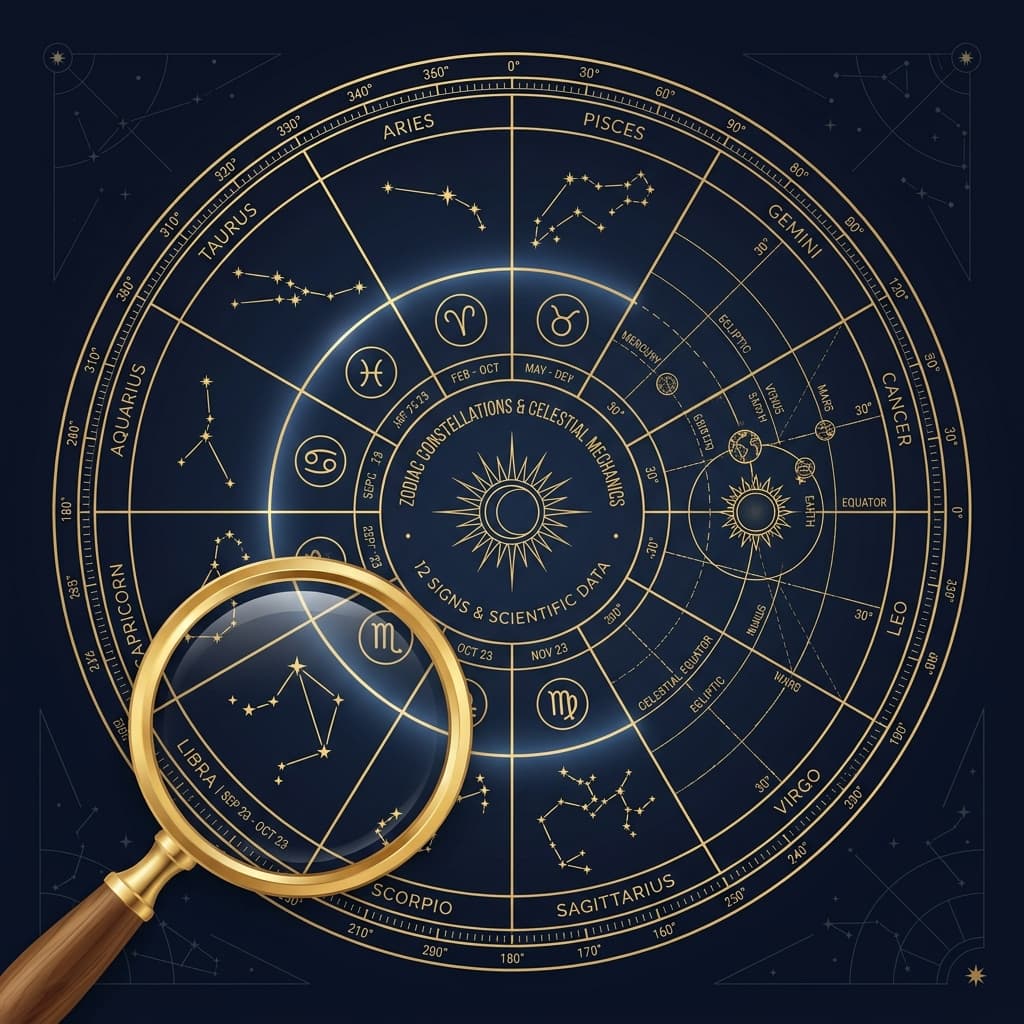
Astrology personality traits are the character descriptions assigned to each of the 12 zodiac signs based on the position of the sun, moon, and planets at the moment of someone's birth. A Leo, for example, is traditionally described as confident and dramatic, while a Virgo is described as analytical and detail-oriented. These descriptions come from natal astrology, a system with roots going back thousands of years to Babylonian and Hellenistic sky-watchers, long before psychology existed as a formal science.
The Case Believers Make
Supporters of astrology argue that:
- Consistent patterns of behaviour seem to show up across people who share a sign, at least anecdotally.
- Astrology offers a shared vocabulary for talking about personality, emotions, and compatibility.
- Even without proven causation, the practice of reflecting on a chart can prompt genuine self-insight.
- Cultures across the world, from Vedic astrology in India to Chinese zodiac traditions, independently developed similar sky-based personality systems, which believers see as suggestive.
These are real reasons people find value in astrology — but "people find it valuable" and "it is scientifically accurate" are two very different claims.
Is Astrology Scientifically Real?
Short answer: no controlled study has found that star signs reliably predict personality. The most famous test of this question is a 1985 double-blind study on astrology published in Nature, one of the world's most respected scientific journals. Professional astrologers were given real birth charts and psychological profiles and asked to match them correctly. Their success rate was no better than random chance. Since then, multiple follow-up studies comparing zodiac sign to measured traits like the Big Five personality dimensions have failed to find a reliable link.
This doesn't prove astrology is "impossible" in some absolute sense, but it does mean the core claim — that planetary positions at birth shape personality in a measurable, repeatable way — has not held up under scientific testing.
Why Do Zodiac Descriptions Feel So Accurate?
If astrology isn't measurably true, why does your horoscope so often feel like it was written about you? This comes down to a documented psychological pattern called the Barnum effect (also called the Forer effect, after psychologist Bertram Forer). In a classic 1948 experiment, Forer gave a group of students an identical, vague personality description, taken partly from astrology texts, and told each of them it was written specifically for them. Rated on accuracy, the average score was over 4 out of 5 — even though every student received the exact same paragraph.
A few things make this effect so powerful with astrology specifically:
- Vagueness reads as personal. Statements like "you can be reserved but open up around people you trust" apply to almost everyone, so they feel tailor-made.
- Confirmation bias does the rest. People tend to remember the parts of a reading that felt true and quietly forget the parts that didn't.
- Subjective validation kicks in. Once someone identifies with a sign, from that point on they start noticing "evidence" that fits and filtering out what doesn't.
Sun, Moon & Rising: The "Big Three" Explained
Most people only know their sun sign, but astrologers argue that's an oversimplification. The "Big Three" adds two more layers:
- Sun sign – based on your birth date; associated with your core identity.
- Moon sign – based on the moon's position at your exact birth time; associated with emotions and inner life.
- Rising (Ascendant) sign – based on your birth time and location; associated with first impressions and how others see you.
Whether or not you take the predictive claims seriously, calculating your full chart is a more complete astrological picture than a sun sign alone. You can work out each one instantly with CalZone's Sun Sign Calculator, Moon Sign Calculator, Rising Sign Calculator, or get all three at once with the Big Three Calculator.
Astrology vs. Personality Psychology
It's worth separating astrology from actual personality science. Psychologists typically measure personality using frameworks like the Big Five (openness, conscientiousness, extraversion, agreeableness, neuroticism), which are built from decades of statistical data on how traits cluster and predict real-world behaviour. Astrology, by contrast, assigns traits based on birth timing rather than observed behaviour or validated testing. That's the central difference: one system is derived from evidence and refined against it; the other assigns a fixed description based on when you were born and doesn't change no matter what the data shows.
So, Fact or Fiction? The Verdict
Astrology personality traits are best understood as fiction with genuine psychological and cultural value — not as a scientifically validated model of personality. The evidence doesn't support the idea that your sun sign predicts how you'll behave, but the appeal of astrology isn't really about prediction for most people. It's a reflective, storytelling framework, and used that way — rather than as a substitute for real self-understanding or professional advice — it's a harmless part of how many people think about themselves.
If you enjoy exploring it, CalZone's free UK astrology calculators — including Venus Sign and North Node tools — let you do it quickly, accurately, and without needing to buy into any of the pseudo-scientific claims to have fun with it.
Written by Sulzax
Expert writer and contributor at CalZone, specialized in creating accurate tools and simple guidelines for UK readers.
iSources & References
Big Three Calculator
Want to calculate your own Sun, Moon, and Rising signs instantly? Use our free Big Three Calculator.
Open Calculator FreeExplore CalZone's Free Specialist Calculators
Plan your finances, property renovations, health goals, and daily commute with our 300+ free UK tools.