
The Connection Between Astrology and Personality Traits
Discover how astrology links to personality traits, explore your zodiac sign, and calculate your Big Three free with CalZone UK.
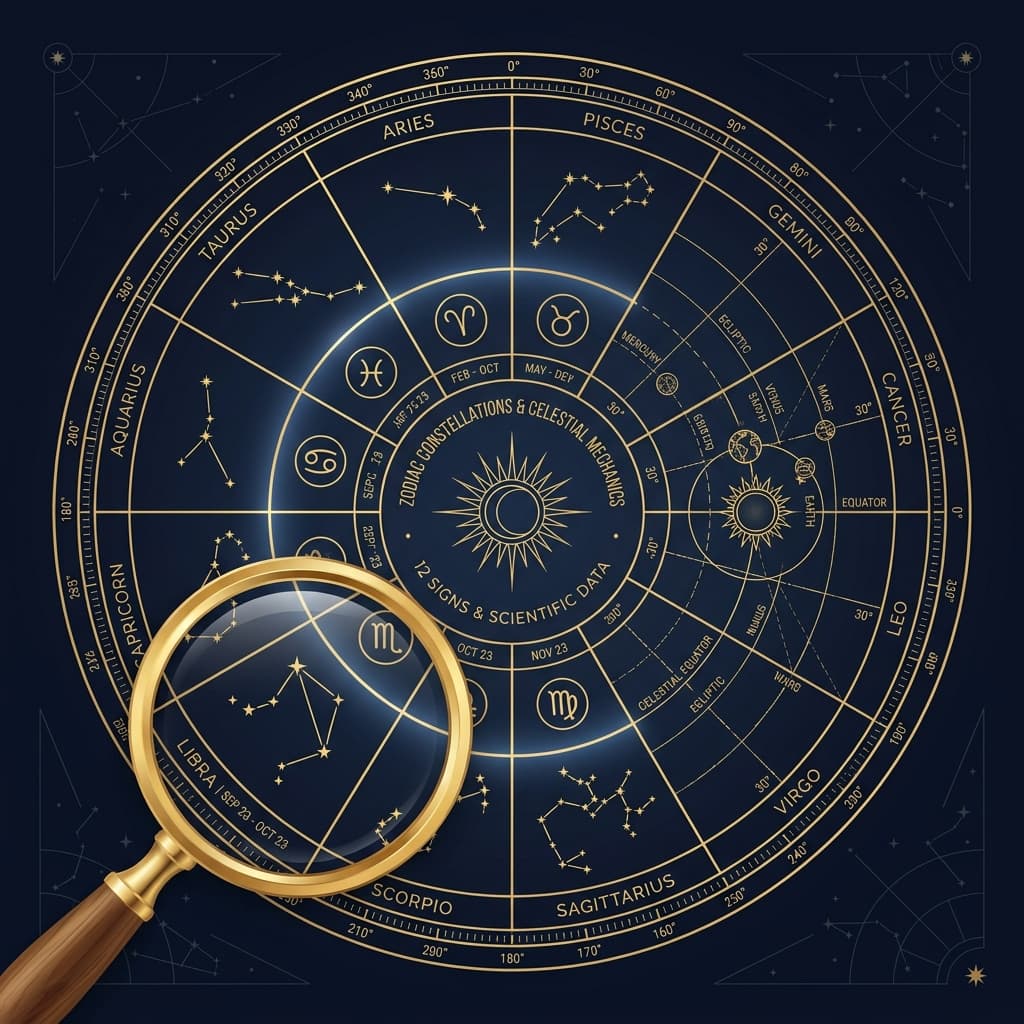
Welcome to CalZone's ultimate UK guide on The Connection Between Astrology and Personality Traits. Designed and compiled by Sulzax_Dev, this comprehensive guide breaks down verified UK rules, official statistics, and practical strategies to help you navigate your decisions smoothly.
The Connection Between Astrology and Personality Traits
Scroll through any UK social feed and you'll spot it within seconds: "typical Scorpio," "so Virgo of you," "must be a Gemini thing." Astrology has quietly become one of the most common languages Britons use to describe personality — even among people who'd never call themselves believers. But where did this connection between astrology and personality traits actually come from, and is there anything behind it, or is it simply a very old, very good story we tell about ourselves?
This guide breaks down how astrology claims to shape character, what the Big Three signs really mean, how each element and modality influences temperament, and what psychology has to say about why the system feels so accurate. Along the way, you can work out your own placements using CalZone's free UK-built astrology calculators.
What Is Astrology, Really?
Astrology is the belief system that the positions of the sun, moon, and planets at the moment of your birth correspond to patterns in your personality, relationships, and life events. It has roots stretching back over 2,500 years to Babylonian sky-watchers, and it later evolved into the tropical zodiac system most Western astrologers use today — the one built around the twelve familiar signs from Aries to Pisces.
Modern astrology isn't really about "predicting" your day from a single sign. Professional astrologers instead build a birth chart (or natal chart): a snapshot of exactly where every planet sat in the sky at your precise time and location of birth. That chart is treated as a kind of personality blueprint, with each planet said to govern a different part of who you are — your emotions, your communication style, your ambitions, and more.
The Big Three: Sun, Moon, and Rising Signs Explained
Most personality-focused astrology centres on three placements, often called the "Big Three."
Sun sign — This is the sign most people mean when they say "I'm a Leo" or "I'm a Capricorn." It's determined by the sun's position on your birthday and is said to represent your core identity, ego, and the general direction you're growing toward. You can find yours instantly with the Sun Sign Calculator.
Moon sign — Astrologers link the moon to emotional instinct: how you self-soothe, what makes you feel secure, and how you react under stress rather than how you present yourself outwardly. Because the moon moves through a sign every two to three days, you need an accurate birth time to calculate it — try the Moon Sign Calculator for a precise result.
Rising sign (Ascendant) — This is the sign that was rising on the eastern horizon at your exact birth time and place. It's associated with first impressions, body language, and how others perceive you before they know you well. Check yours with the Rising Sign Calculator.
Together, these three placements are thought to give a far richer personality picture than a sun sign alone — which is why many astrology fans describe sun-only horoscopes as reading "only a third of the story." If you want all three at once, CalZone's combined Sun, Moon, and Rising Calculator generates your full Big Three in one go, using only your date, time, and place of birth.
How Each Zodiac Element Shapes Personality
Astrology groups the twelve signs into four elements, and understanding them is one of the fastest ways to see how the system claims to build a personality profile.
Fire signs (Aries, Leo, Sagittarius): Associated with energy, confidence, and spontaneity. Fire personalities are said to be direct, competitive, and quick to act on impulse.
Earth signs (Taurus, Virgo, Capricorn): Linked to practicality, patience, and reliability. Earth personalities are described as grounded, detail-oriented, and motivated by tangible results.
Air signs (Gemini, Libra, Aquarius): Connected to intellect, communication, and social connection. Air personalities are framed as curious, talkative, and idea-driven.
Water signs (Cancer, Scorpio, Pisces): Tied to emotion, intuition, and sensitivity. Water personalities are portrayed as empathetic, imaginative, and deeply feeling.
Signs are also split into three modalities — cardinal (initiators, like Aries and Cancer), fixed (stabilisers, like Taurus and Leo), and mutable (adapters, like Gemini and Pisces) — which astrologers layer over the elements to explain finer shades of temperament, such as why two fire signs can behave so differently from one another.
Astrology vs Psychology: What Does Science Say?
Here's where it gets genuinely interesting. Peer-reviewed psychology has tested the sun-sign-personality link repeatedly, and the consensus is clear: there's no reliable statistical evidence that your birth sign predicts personality traits measured on validated scales such as the Big Five (openness, conscientiousness, extraversion, agreeableness, and neuroticism). Large-scale studies comparing thousands of birth dates against personality test results have found no meaningful correlation.
So why does it feel so accurate? Psychologists point to a few well-documented effects:
The Barnum effect — a tendency to rate vague, generalised statements ("you can be reserved but are actually quite passionate once someone earns your trust") as personally accurate, even though they apply to almost everyone.
Confirmation bias — once you're told you're "a typical Scorpio," you notice the moments that fit and quietly forget the ones that don't.
Self-fulfilling prophecy — if you grow up hearing you're "a stubborn Taurus," you may unconsciously lean into that identity over time.
None of this means astrology is pointless, though. Even outside the scientific literature, many people find real value in the reflection it prompts — using a birth chart as a structured way to think through their strengths, patterns, and relationships, in much the same way journalling prompts or personality quizzes are used. For balanced background on the psychology side, resources from the American Psychological Association and reporting from Pew Research Center on public belief in astrology are worth a read, alongside Britannica's overview of astrology's history for context on where the tradition comes from.
Beyond the Sun Sign: Venus, Chiron, Lilith and the North Node
Serious birth-chart readers rarely stop at the Big Three. A handful of other placements are commonly used to fill in specific personality details:
Venus sign — Said to reveal how you express affection, what you find attractive, and your personal taste and style. Use the Venus Sign Calculator to find yours.
Chiron sign — Nicknamed the "wounded healer," it's associated with a core area of sensitivity that, astrologers argue, can become a source of strength once understood. Try the Chiron Sign Calculator.
Lilith sign — Linked to raw, unfiltered instinct and the parts of personality that don't conform to convention. Calculate it with the Lilith Sign Calculator.
North Node — Considered a marker of long-term growth and life direction rather than fixed personality, pointing toward qualities you're meant to develop over time. Find yours with the North Node Calculator.
Together with the Big Three, these placements form what astrologers call a fuller "personality map" — dozens of data points rather than a single label.
Why Millions of Brits Turn to Astrology for Self-Understanding
Astrology's popularity across the UK has grown steadily, particularly among younger adults who treat it less as fortune-telling and more as a shared framework for talking about identity, compatibility, and emotional patterns. Horoscope columns remain a staple of British newspapers and magazines, astrology apps regularly top UK download charts, and "what's your sign" has become a normal icebreaker at parties from London to Glasgow.
Part of the appeal is accessibility: unlike therapy or formal personality testing, a birth chart is free to generate, instantly personal, and gives people a shared vocabulary — "Mercury retrograde," "big three," "Saturn return" — to make sense of everyday ups and downs. Whether or not the mechanism is scientifically valid, the ritual of reflection it encourages appears to be genuinely useful for many people.
How to Explore Your Own Birth Chart
If you want to see how astrology maps onto your own personality, the process only takes a minute. You'll need three things: your date of birth, your exact time of birth (check your birth certificate for the most accurate result), and your place of birth.
Head to CalZone's astrology calculators hub to run any placement individually, or use the Sun, Moon, and Rising Calculator to generate your full Big Three instantly and free, with results built for UK users from day one.
Frequently Asked Questions
Does astrology actually determine personality traits? No controlled scientific study has found a reliable link between zodiac sign and measurable personality traits. Psychologists attribute astrology's perceived accuracy to the Barnum effect, confirmation bias, and self-fulfilling prophecy rather than a causal astronomical mechanism.
What's the difference between a sun sign and a birth chart? A sun sign reflects only the sun's position on your birthday, while a full birth chart maps every planet's position at your exact birth time and location — giving a much more detailed personality picture, starting with your Big Three (sun, moon, and rising signs).
Which zodiac sign has the strongest personality, according to astrology? Fixed signs — Taurus, Leo, Scorpio, and Aquarius — are traditionally described in astrology as having the most stable, determined personalities, since the fixed modality is associated with consistency and resistance to change.
Can two people with the same sun sign have completely different personalities? Yes. Astrologers explain this through the rest of the birth chart — moon sign, rising sign, and other planetary placements — which vary based on birth time and location even when the sun sign is identical.
Is astrology the same as astronomy? No. Astronomy is the scientific study of celestial objects and physics, while astrology is a symbolic belief system that assigns personality and life meaning to those same objects' positions. The two share a historical origin but are treated as separate fields today.
How do I find my Big Three signs for free? Enter your date, time, and place of birth into CalZone's free Sun, Moon, and Rising Calculator to instantly generate all three placements.
Final Thoughts
Whether astrology genuinely shapes personality or simply gives us a colourful shorthand for talking about it, its influence on how we describe ourselves isn't going anywhere. Understanding the mechanics — the Big Three, the elements, the wider chart — makes the whole system far more meaningful than a one-line horoscope ever could. Curious where you land? Explore your full profile with CalZone's free astrology calculators, built specifically for UK users.
Explore CalZone's 40+ UK Specialist Tools & Guides
Access our complete suite of verified UK calculators for quick, accurate calculations across finance, health, energy, housing, and lifestyle:
- Salary Calculator UK
- Income Tax Calculator UK
- Take-Home Pay Calculator
- National Insurance Calculator
- Mortgage Calculator UK
- Mortgage Repayment Calculator
- Stamp Duty Calculator UK
- Capital Gains Tax Calculator
- Share Dealing Fee Calculator
- Portfolio Return Calculator UK
- Dividend Tax Calculator UK
- VAT Calculator UK
- Payslip Calculator UK
- Minimum Wage Calculator UK
- Statutory Sick Pay Calculator
- Solar Panel Cost Calculator UK
- Solar Payback Period Calculator
- EV Charging Cost Calculator UK
- Car Road Tax Calculator UK
- Fuel Cost Calculator UK
- Car Insurance Cost Calculator
- Bathroom Renovation Cost Calculator
- Kitchen Extension Cost Calculator
- Conservatory Cost Calculator UK
- EPC Improvement Calculator UK
- Boiler Replacement Cost Calculator
- Concrete Calculation Guide
- BMI Calculator UK
- BMR & Calorie Deficit Calculator
- Body Fat Percentage Calculator
- UK School Age Calculator
- Child School Start Date Calculator
- Big Three Astrology Calculator
- Sun Sign Calculator
- Moon Sign Calculator
- Rising Sign Calculator
- Venus Sign Calculator
- Chiron Sign Calculator
- Lilith Sign Calculator
- North Node Calculator
- Part of Fortune Calculator
- Vertex Sign Calculator
- Fence Panel Calculator UK
- Post & Rail Fencing Calculator
- Picket Fence Calculator UK
- Trellis Panel Calculator UK
Written by Sulzax_Dev
Sulzax_Dev is a lead software engineer, calculator enthusiast, and data analyst. He designs high-precision tracking tools and writes deep analytical guides to simplify complex financial, health, and astrological calculations.
iSources & References
- [1]GOV.UK — Income Tax Rates & Personal Allowances
- [2]GOV.UK — National Insurance Rates & Thresholds
- [3]GOV.UK — Statutory Maternity Pay & Leave
- [4]GOV.UK — Council Tax Bands & Valuation List
- [5]GOV.UK — National Minimum Wage & Living Wage Rates
- [6]GOV.UK — Marriage Allowance Claim & Eligibility
- [7]GOV.UK — Stamp Duty Land Tax (SDLT) Rates
- [8]GOV.UK — Vehicle Excise Duty (Road Tax) Rates
- [9]GOV.UK — Energy Performance Certificates (EPC) Register
- [10]GOV.UK — Statutory Sick Pay (SSP) Rates
- [11]GOV.UK — State Pension Rates & Qualifying Years
- [12]GOV.UK — School Admissions Code & Application Rules
- [13]ONS — Annual Survey of Hours and Earnings (ASHE)
- [14]ONS — Consumer Price Inflation (CPI) UK
- [15]ONS — UK House Price Index
- [16]Bank of England — Official Bank Rate & Monetary Policy
- [17]Ofgem — Energy Price Cap & Tariff Updates
- [18]HMRC — Payslip & Tax Code Breakdown Guide
- [19]MoneyHelper — UK Budgeting & Personal Finance Advice
- [20]MoneyHelper — Investing & Share Dealing Basics
- [21]MoneyHelper — Shared Ownership & Housing Schemes
- [22]Citizens Advice — Understanding Your Payslip & Taxes
- [23]Citizens Advice — Council Tax Band Appeals & Discounts
- [24]Which? — Best Share Dealing Platforms UK
- [25]Which? — Home Energy Efficiency & EPC Ratings
- [26]Which? — Solar Batteries & Solar PV Savings Guide
- [27]Energy Saving Trust — Solar Battery Storage Guide
- [28]Energy Saving Trust — EPC Rating Improvement Tips
- [29]Financial Conduct Authority (FCA) — Investment Rules
- [30]NHS — Healthy Weight & BMI Guidance
- [31]NHS — Maternity & Pregnancy Benefits Guide
- [32]Department for Education — School Year Groups & Primary Admissions
- [33]RAC — UK Fuel Price Tracker & Journey Planning
- [34]AA — UK Speeding Fines & Penalty Point Guide
- [35]Astrological Association UK — Birth Chart & Planetary History
- [36]London Stock Exchange (LSE) — FTSE 100 Market Data
- [37]Valuation Office Agency (VOA) — Council Tax Bands
- [38]Homes England — Affordable Home Ownership Programs
- [39]Advisory, Conciliation and Arbitration Service (ACAS) — Payslips
- [40]Motorists' Legal Protection — Speed Awareness Course Guide
- [41]Ofsted — UK School Inspection Reports & Admission Standards
- [42]Microgeneration Certification Scheme (MCS) — Solar Quality
- [43]Smart Energy GB — Smart Meter & Home Battery Benefits
- [44]Building Research Establishment (BRE) — Standard Assessment Procedure (SAP)
- [45]Association of British Insurers (ABI) — Motor Claims Data
Big Three Astrology Calculator
Calculate your Sun, Moon, and Rising signs instantly.
Open Calculator FreeExplore CalZone's Free Specialist Calculators
Plan your finances, property renovations, health goals, and daily commute with our 300+ free UK tools.