
What Is a Good EPC Rating and How Do You Improve It?
Discover what counts as a good EPC rating in the UK, how EPC bands A–G work, and the fastest ways to boost your score before the 2030 EPC C rules.
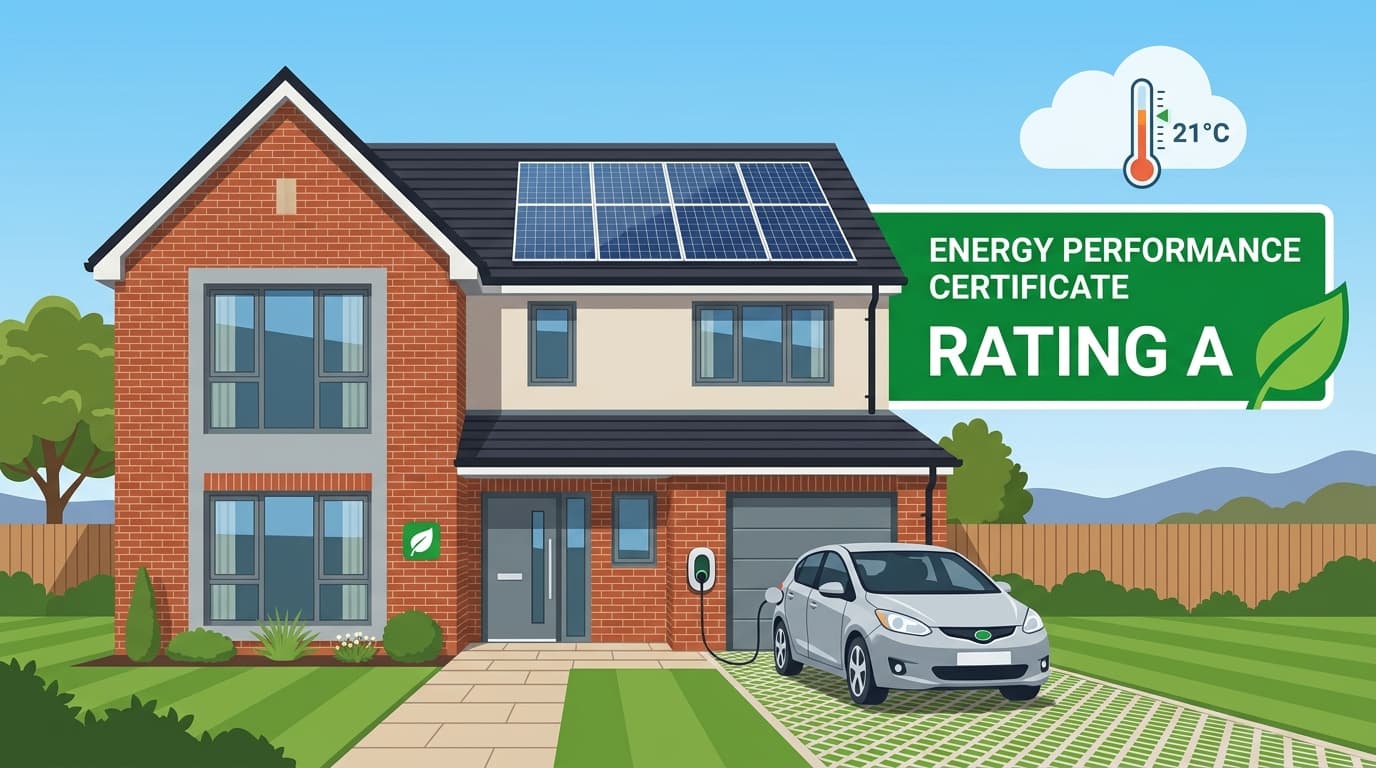
Welcome to CalZone's ultimate UK guide on What Is a Good EPC Rating and How Do You Improve It?. Designed and compiled by Sulzax_Dev, this comprehensive guide breaks down verified UK rules, official statistics, and practical strategies to help you navigate your decisions smoothly.
What Is a Good EPC Rating and How Do You Improve It?
If you've ever seen a coloured chart on a property listing running from a dark green A down to a red G, you've seen an Energy Performance Certificate — or EPC. But what actually counts as a good EPC rating in the UK, and more importantly, what can you do if your home falls short?
This guide breaks down the EPC rating scale in plain English, explains what "good" really means for homeowners, buyers, and landlords in 2026, and gives you a practical, room-by-room plan to raise your score — without needing an engineering degree to understand it.
What Is an EPC Rating?
An Energy Performance Certificate (EPC) is a legal document that rates how energy efficient a property is, on a scale from A (most efficient) to G (least efficient). It's produced by an accredited Domestic Energy Assessor (DEA) after a home survey, and it's a legal requirement whenever a property in England, Wales, or Northern Ireland is built, sold, or rented out. You can look up any registered property's current certificate on the official gov.uk EPC register.
Every EPC includes two main numbers:
SAP score (1–100+): the underlying energy efficiency points that determine your band
EPC band (A–G): the letter grade most people actually see and act on
Alongside the rating, the certificate lists your home's estimated annual energy costs, its environmental (CO₂) impact, and a recommendations report suggesting specific upgrades, roughly ranked by cost and impact.
The EPC Rating Scale Explained
Band
SAP Score
What It Means
A
92–100
Exceptional efficiency — usually new-build, highly insulated homes
B
81–91
Excellent — near-zero heating waste
C
69–80
Good — the current benchmark for "efficient" housing
D
55–68
Average — where most existing UK homes currently sit
E
39–54
Below average — the current legal minimum for rented homes
F
21–38
Poor — high energy costs, limited insulation
G
1–20
Very poor — typically older, uninsulated, or off-grid properties
So, What Counts as a "Good" EPC Rating?
In practical terms, band C (69–80 points) is widely considered the threshold for a "good" EPC rating in the UK today. Here's why:
It's the government's long-standing target band for as many homes as possible under national net-zero housing policy.
It typically means noticeably lower energy bills compared with a D or E-rated home of the same size.
It's the standard mortgage lenders, green mortgage products, and increasingly buyers now look for.
Crucially, it's the level the government intends to make the legal minimum for private rental properties from 1 October 2030, under the Warm Homes Plan.
Bands A and B are excellent but relatively rare outside new-build developments — most period and pre-2000 UK homes simply weren't constructed with that level of insulation and airtightness. If your home currently sits at D, you're in the same position as most of the country, but D is no longer considered future-proof, especially for landlords.
Why EPC Ratings Matter More in 2026
EPC ratings aren't just a box-ticking exercise anymore:
Landlords: the legal minimum for a new or renewed tenancy is currently band E. Properties rated F or G cannot legally be let without a registered exemption. The government has confirmed its intention to raise this minimum to band C by 1 October 2030, with a proposed cost cap on required works.
Homebuyers: a poor EPC rating is now a genuine negotiating point, since it signals higher running costs and future retrofit spend.
Homeowners: a better rating generally means lower gas and electricity bills, better comfort, and improved resale value.
Everyone: EPCs remain valid for 10 years, so an old certificate may no longer reflect improvements you've already made — it's worth checking when yours expires.
How to Improve Your EPC Rating
Improving your EPC score comes down to reducing heat loss, using energy more efficiently, and (where relevant) generating your own. Here's the order most assessors and energy advisors recommend, roughly from cheapest/highest-impact to more involved:
1. Fix the Easy Wins First
Loft insulation: one of the cheapest, most effective upgrades. Uninsulated lofts can be responsible for around a quarter of a typical home's heat loss. Use CalZone's Loft Insulation Calculator to estimate how much material and cost you'll need.
Draught-proofing: sealing gaps around doors, windows, and floorboards is inexpensive and can noticeably cut heat loss. Try the Draft Proofing Calculator to plan the job.
LED lighting and efficient appliances: small changes that still contribute to your overall energy efficiency score.
2. Improve Insulation Where It Counts
Cavity wall insulation: if your home was built with a cavity wall (most homes from the 1920s onward), filling it is one of the highest-impact, lowest-disruption upgrades available. Use the Cavity Wall Insulation Calculator to estimate coverage and cost.
Solid wall or PIR insulation: for older solid-wall properties, internal or external insulation boards make a bigger difference but cost more. The PIR Insulation Calculator helps size the job.
U-values: assessors look at how well your walls, roof, and floor resist heat loss (the U-value). Lower is better. You can model this yourself with the U-Value Calculator UK before committing to a specification.
3. Upgrade Your Heating System
An old, inefficient boiler drags down your rating regardless of how well insulated your walls are. Options include:
Replacing an ageing boiler with a modern condensing model — see the Boiler Replacement Cost Calculator to budget realistically.
Switching to an air source heat pump, which can significantly boost your score in the newer assessment methodology, and may qualify for government grants via the Boiler Upgrade Scheme.
Installing smart heating controls, room thermostats, and thermostatic radiator valves (TRVs), which assessors credit even without a full system replacement.
4. Generate Your Own Energy
Solar PV panels are one of the most effective ways to jump a full band or more, particularly combined with battery storage. Model your expected output with the Solar Panel Yield Calculator UK and check overall project cost with the Solar Panel Cost Calculator.
Battery storage improves how efficiently you use the electricity you generate. Size a system with the Battery Storage Sizing Calculator UK.
5. Plan the Whole Project Before You Spend
Before committing to any of the above, it's worth running the numbers on the combined impact. CalZone's EPC Improvement Calculator UK lets you test different combinations of upgrades — loft insulation, cavity walls, heating, and solar — to see roughly how many EPC points each one could add, so you're not spending on upgrades that won't actually shift your band.
If you're weighing this up as part of a house purchase, a House Survey Cost Calculator and Mortgage Calculator can help you budget for both the survey and any retrofit costs alongside your purchase.
A Realistic Improvement Order for Most UK Homes
Loft insulation and draught-proofing (fast, cheap, high impact)
Cavity wall or solid wall insulation
Heating controls and thermostat upgrades
Boiler replacement or heat pump installation
Solar PV and battery storage
Tackling them roughly in this order tends to give the best return per pound spent, since fabric improvements (insulation, draught-proofing) reduce how much heating you need in the first place, before you invest in a more efficient way of generating that heat.
Quick Answers: Good EPC Rating FAQs
What is considered a good EPC rating in the UK? Band C (a SAP score of 69–80) is generally considered a good EPC rating. It signals solid energy efficiency, lower-than-average bills, and meets the government's proposed 2030 minimum standard for rented homes.
What is the average EPC rating for UK homes? Most existing UK homes currently sit around band D, reflecting the country's older housing stock and the fact that cavity wall and loft insulation weren't standard until relatively recently.
Is a D EPC rating bad? Not illegal, and not unusual — but it's below the "good" threshold and below the proposed future minimum for rental properties. If you're planning to sell, rent, or simply reduce bills, moving from D to C is usually achievable with loft and cavity wall insulation alone.
Can I improve my EPC rating without spending a lot of money? Yes. Loft insulation, draught-proofing, and smart heating controls are among the cheapest upgrades and often deliver a meaningful jump in points relative to their cost.
How long does an EPC certificate last? Ten years from the date of assessment. If you've made improvements since your last certificate was issued, it's worth getting reassessed, since your official rating won't reflect the work until it is.
Do I need a good EPC rating to rent out my property? The current legal minimum is band E, but the government has confirmed plans to raise this to band C by 1 October 2030 under the Warm Homes Plan, so planning ahead now avoids a costly last-minute scramble.
Final Thoughts
A good EPC rating isn't about chasing a letter for its own sake — it's a shorthand for lower bills, a warmer home, and (increasingly) legal compliance if you rent out property. Band C is the realistic target for most UK homes today, and getting there is usually a case of insulating first, heating smarter second, and generating your own energy third.
Before you commit to any single upgrade, use CalZone's free EPC Improvement Calculator UK alongside the insulation, heating, and solar calculators linked above to see which combination of improvements gets you from your current band to a genuinely good one — without overspending on upgrades that won't move the needle.
This article is for general information only and does not constitute professional energy assessment, legal, or financial advice. For an official rating, always use an accredited Domestic Energy Assessor and check the gov.uk EPC register. Landlords should refer to the gov.uk MEES guidance for the latest compliance rules.
Explore CalZone's 40+ UK Specialist Tools & Guides
Access our complete suite of verified UK calculators for quick, accurate calculations across finance, health, energy, housing, and lifestyle:
- Salary Calculator UK
- Income Tax Calculator UK
- Take-Home Pay Calculator
- National Insurance Calculator
- Mortgage Calculator UK
- Mortgage Repayment Calculator
- Stamp Duty Calculator UK
- Capital Gains Tax Calculator
- Share Dealing Fee Calculator
- Portfolio Return Calculator UK
- Dividend Tax Calculator UK
- VAT Calculator UK
- Payslip Calculator UK
- Minimum Wage Calculator UK
- Statutory Sick Pay Calculator
- Solar Panel Cost Calculator UK
- Solar Payback Period Calculator
- EV Charging Cost Calculator UK
- Car Road Tax Calculator UK
- Fuel Cost Calculator UK
- Car Insurance Cost Calculator
- Bathroom Renovation Cost Calculator
- Kitchen Extension Cost Calculator
- Conservatory Cost Calculator UK
- EPC Improvement Calculator UK
- Boiler Replacement Cost Calculator
- Concrete Calculation Guide
- BMI Calculator UK
- BMR & Calorie Deficit Calculator
- Body Fat Percentage Calculator
- UK School Age Calculator
- Child School Start Date Calculator
- Big Three Astrology Calculator
- Sun Sign Calculator
- Moon Sign Calculator
- Rising Sign Calculator
- Venus Sign Calculator
- Chiron Sign Calculator
- Lilith Sign Calculator
- North Node Calculator
- Part of Fortune Calculator
- Vertex Sign Calculator
- Fence Panel Calculator UK
- Post & Rail Fencing Calculator
- Picket Fence Calculator UK
- Trellis Panel Calculator UK
Written by Sulzax_Dev
Sulzax_Dev is a lead software engineer, calculator enthusiast, and data analyst. He designs high-precision tracking tools and writes deep analytical guides to simplify complex financial, health, and astrological calculations.
iSources & References
- [1]GOV.UK — Income Tax Rates & Personal Allowances
- [2]GOV.UK — National Insurance Rates & Thresholds
- [3]GOV.UK — Statutory Maternity Pay & Leave
- [4]GOV.UK — Council Tax Bands & Valuation List
- [5]GOV.UK — National Minimum Wage & Living Wage Rates
- [6]GOV.UK — Marriage Allowance Claim & Eligibility
- [7]GOV.UK — Stamp Duty Land Tax (SDLT) Rates
- [8]GOV.UK — Vehicle Excise Duty (Road Tax) Rates
- [9]GOV.UK — Energy Performance Certificates (EPC) Register
- [10]GOV.UK — Statutory Sick Pay (SSP) Rates
- [11]GOV.UK — State Pension Rates & Qualifying Years
- [12]GOV.UK — School Admissions Code & Application Rules
- [13]ONS — Annual Survey of Hours and Earnings (ASHE)
- [14]ONS — Consumer Price Inflation (CPI) UK
- [15]ONS — UK House Price Index
- [16]Bank of England — Official Bank Rate & Monetary Policy
- [17]Ofgem — Energy Price Cap & Tariff Updates
- [18]HMRC — Payslip & Tax Code Breakdown Guide
- [19]MoneyHelper — UK Budgeting & Personal Finance Advice
- [20]MoneyHelper — Investing & Share Dealing Basics
- [21]MoneyHelper — Shared Ownership & Housing Schemes
- [22]Citizens Advice — Understanding Your Payslip & Taxes
- [23]Citizens Advice — Council Tax Band Appeals & Discounts
- [24]Which? — Best Share Dealing Platforms UK
- [25]Which? — Home Energy Efficiency & EPC Ratings
- [26]Which? — Solar Batteries & Solar PV Savings Guide
- [27]Energy Saving Trust — Solar Battery Storage Guide
- [28]Energy Saving Trust — EPC Rating Improvement Tips
- [29]Financial Conduct Authority (FCA) — Investment Rules
- [30]NHS — Healthy Weight & BMI Guidance
- [31]NHS — Maternity & Pregnancy Benefits Guide
- [32]Department for Education — School Year Groups & Primary Admissions
- [33]RAC — UK Fuel Price Tracker & Journey Planning
- [34]AA — UK Speeding Fines & Penalty Point Guide
- [35]Astrological Association UK — Birth Chart & Planetary History
- [36]London Stock Exchange (LSE) — FTSE 100 Market Data
- [37]Valuation Office Agency (VOA) — Council Tax Bands
- [38]Homes England — Affordable Home Ownership Programs
- [39]Advisory, Conciliation and Arbitration Service (ACAS) — Payslips
- [40]Motorists' Legal Protection — Speed Awareness Course Guide
- [41]Ofsted — UK School Inspection Reports & Admission Standards
- [42]Microgeneration Certification Scheme (MCS) — Solar Quality
- [43]Smart Energy GB — Smart Meter & Home Battery Benefits
- [44]Building Research Establishment (BRE) — Standard Assessment Procedure (SAP)
- [45]Association of British Insurers (ABI) — Motor Claims Data
Explore CalZone's Free Specialist Calculators
Plan your finances, property renovations, health goals, and daily commute with our 300+ free UK tools.