
Not Losing Weight in a Calorie Deficit? 5 Reasons Why.
It is incredibly frustrating to feel ravenously hungry, track your food, and see the scale refuse to budge. If you are 'eating in a deficit' but not losing fat, the laws of thermodynamics haven't broken—your data has.
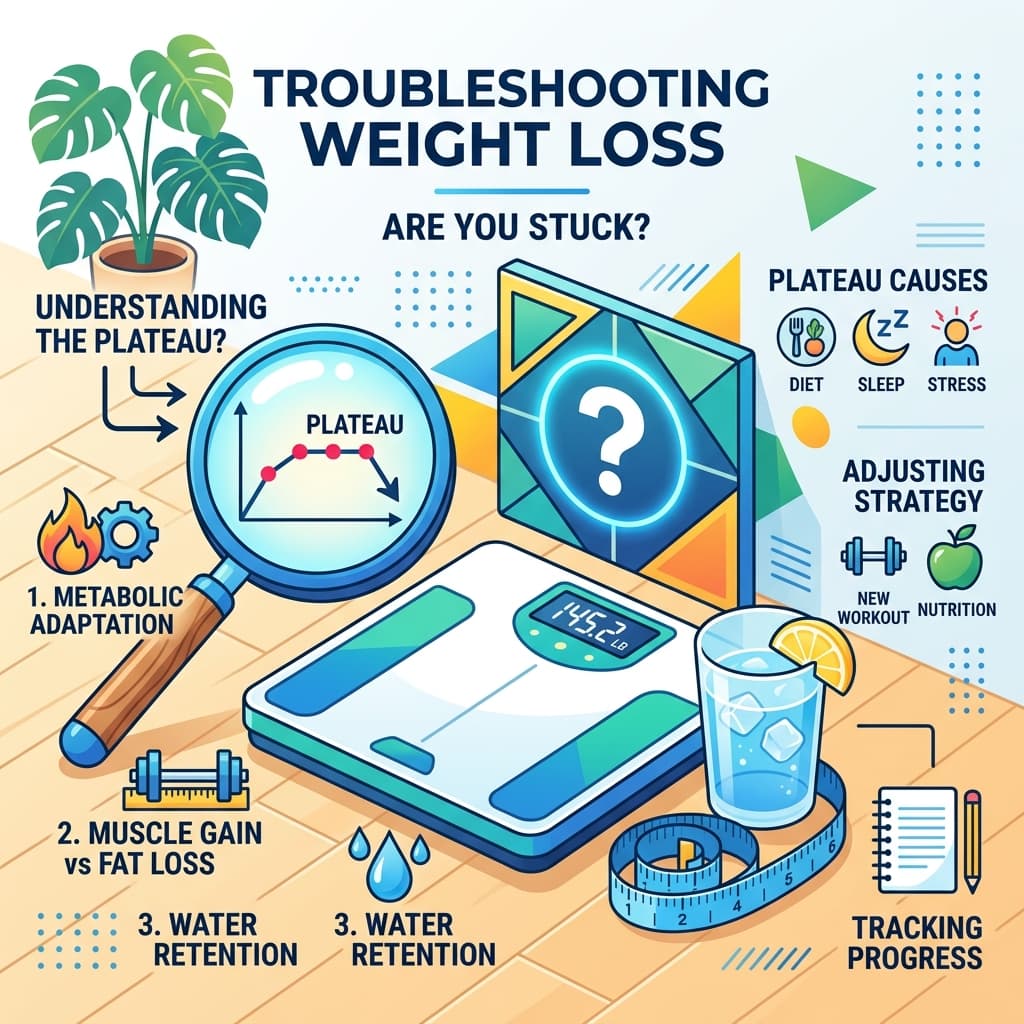
The Hard Truth About Plateaus
Let's establish an uncomfortable reality right off the bat: If you have not lost a single pound over a rolling 4-week period, you are not in a calorie deficit.
This is never an issue of broken biology. The human body cannot synthesize tissue out of thin air. Instead, the problem invariably falls into one of two categories: you are calculating your maintenance incorrectly, or you are systematically under-reporting your true caloric intake.
Here are the five primary reasons your weight loss has stalled, and exactly how to fix them.
1. You Are "Eyeballing" Portion Sizes
Humans are spectacularly terrible at estimating caloric densities visually. Clinical studies consistently demonstrate that individuals attempting to lose weight under-report their daily caloric intake by as much as 30-40%.
- A "tablespoon" of olive oil poured freely from the bottle is rarely 119 calories; it's usually closer to 250.
- A "handful" of almonds can easily exceed 300 calories.
The Fix: Weigh your food. For 14 days, utilize a digital kitchen scale for every gram of food that enters your mouth, especially calorie-dense fats and carbohydrates.
2. The "Weekend Erase" Phenomenon
Your daily calorie deficit is a micro-view; your body operates on the macro-view of the total weekly energy balance.
You can restrict yourself to a pristine 500-calorie deficit from Monday to Friday, heavily restricting carbohydrates. By Friday night, you are physically exhausted and psychologically depleted. A weekend consisting of a few pints at the pub, a heavy Sunday roast, and grazing can instantly inject an uncounted 3,000 surplus calories into your week.
The Fix: Adopt a sustainable daily target that prevents the restrictive binge-cycle, and log your weekend intake with the exact same rigor as your Tuesday intake.
3. A Smaller Body Requires Less Fuel
This is the most common reason for a true dietary plateau. Let's say you started at 100kg and successfully lost 10kg. Congratulations! However, a 90kg body requires significantly less energy to oxygenate cells, pump blood, and move around than a 100kg body.
Your basal metabolic rate (BMR) has dropped. The 2,000 calories that used to constitute a deficit are now merely your maintenance level.
The Fix: You must recalculate your TDEE every 10 to 15 lbs lost.
4. Uncounted Liquid Calories
Liquid calories do not trigger the same satiety signals in the brain as solid food. A large vanilla latte from Costa or Starbucks can easily pack 250-350 calories. Two of those a day entirely wipes out a standard deficit, yet leaves you feeling like you haven't eaten anything.
The Fix: Transition to black coffee, Americanos, green tea, or zero-calorie diet beverages. Do not drink your daily caloric budget.
5. High Cortisol and Water Retention
Sometimes, you truly are in a caloric deficit, and you are actively losing fat tissue, but the bathroom scale lies to you.
Severe caloric restriction acts as a deep physiological stressor. This releases cortisol. Chronically elevated cortisol levels cause extreme fluid retention. You might lose 2lbs of fat in a week, but retain 3lbs of water due to stress, lack of sleep, or a heavy weightlifting session. The scale goes up, inducing panic.
The Fix: Look at 4-week moving averages, not daily fluctuations. Prioritize 8 hours of sleep. If the plateau persists despite verified tracking, take a 3-day "Diet Break" and eat at maintenance calories to flush the stress and drop the water weight.
Frequently Asked Diagnostics
Why am I gaining weight in a calorie deficit?
If the scale goes up despite a true deficit, it is almost entirely due to water retention. High sodium intake, a sudden increase in carbohydrates, intense weightlifting (causing muscle inflammation), or hormonal fluctuations (cortisol, menstrual cycle) can cause temporary scale spikes of 2-5lbs.
Did my metabolism slow down and stop my weight loss?
Metabolic adaptation (adaptive thermogenesis) is real but vastly overstated. As you lose weight, a smaller body requires fewer calories to merely exist. Your TDEE drops. If you do not recalculate your deficit every 10-15 pounds, you will eventually hit maintenance and stop losing.
Do cheat days ruin a calorie deficit?
Yes, easily. If you maintain a 500-calorie deficit Monday through Friday, you 'bank' a deficit of 2,500 calories. If you overeat by 3,000 calories via takeaways and alcohol on Saturday, you have effectively erased your entire week's progress.
Written by Dr. Alan Richards
Expert writer and contributor at CalZone, specialized in creating accurate tools and simple guidelines for UK readers.
iSources & References
Calorie Deficit Calculator
Have you recalculated your numbers recently? A smaller body burns fewer calories. Update your metrics now.
Open Calculator FreeExplore CalZone's Free Specialist Calculators
Plan your finances, property renovations, health goals, and daily commute with our 300+ free UK tools.