
How Much Tax Do I Pay on £30,000 in the UK? (2026/27 Guide)
If you're earning £30,000 and want to know exactly where your money goes each payday, this guide breaks it down step by step using the confirmed 2026/27 tax bands, thresholds, and National Insurance rates.
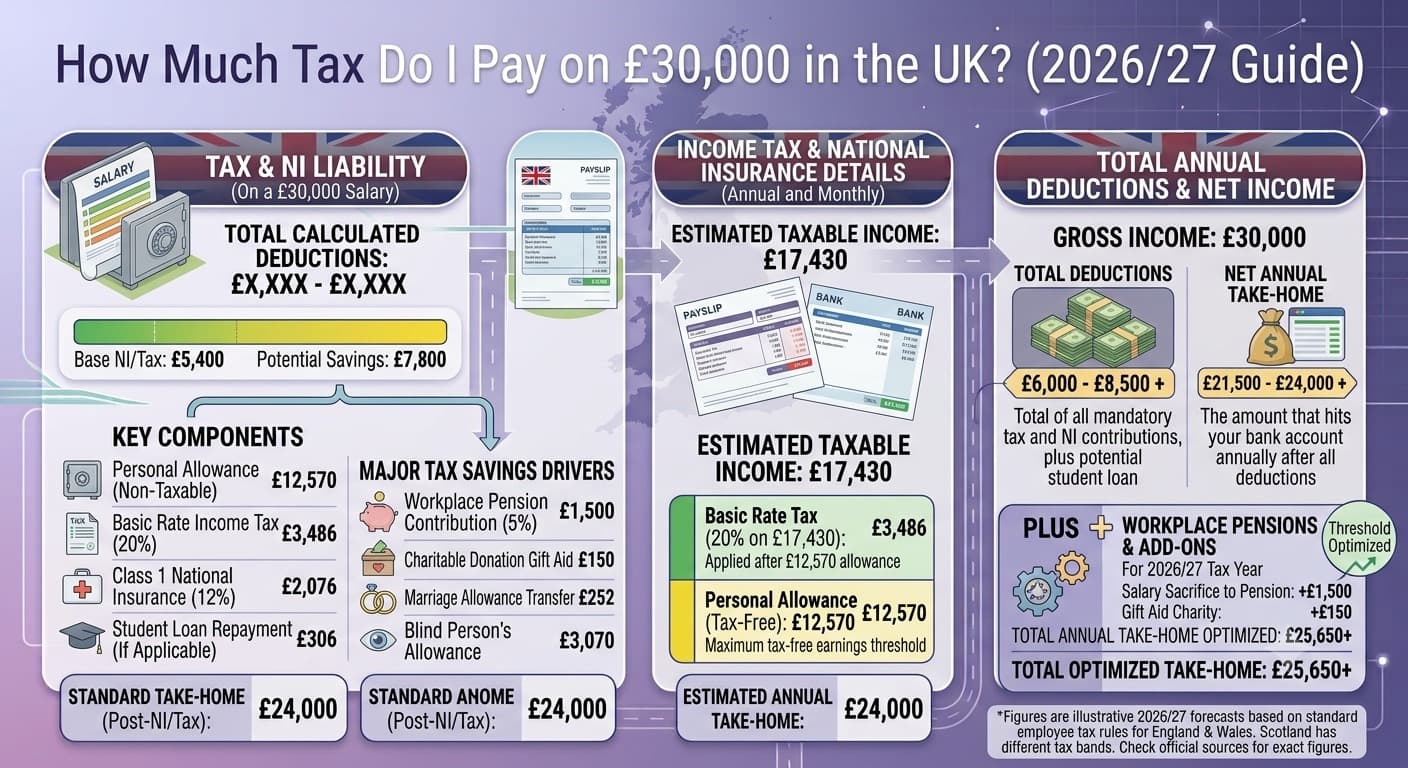
On a £30,000 salary in the UK for the 2026/27 tax year, you'll pay approximately £3,486 in Income Tax and £1,393 in National Insurance, leaving you with a take-home pay of around £25,120 a year — that's roughly £2,093 a month or £483 a week, before pension contributions or student loan repayments.
Understanding your tax bill is the first step to financial clarity. At CalZone, we build tools to help people in the UK understand and manage their money with confidence.
The Short Version: £30,000 Tax Breakdown at a Glance
| Deduction | Annual Amount | Monthly | Weekly |
|---|---|---|---|
| Gross Salary | £30,000 | £2,500 | £576.92 |
| Personal Allowance | £12,570 | £1,047.50 | £241.73 |
| Income Tax (20%) | £3,486 | £290.50 | £67.04 |
| National Insurance (8%) | £1,393.28 | £116.11 | £26.79 |
| Take-Home Pay | £25,120.72 | £2,093.39 | £483.09 |
These figures assume you're on the standard tax code (1257L), have no student loan, no workplace pension deductions, and are not resident in Scotland (Scottish rates differ slightly — more on that below).
Understanding the 2026/27 Tax Year Rates
Every UK tax year runs from 6 April to 5 April the following year, so 2026/27 covers 6 April 2026 to 5 April 2027. For this tax year, the government has kept the core Income Tax thresholds frozen at the same levels as 2025/26, continuing a freeze that has been in place since 2021/22.
Income Tax Bands for 2026/27 (England, Wales & Northern Ireland)
| Band | Taxable Income | Tax Rate |
|---|---|---|
| Personal Allowance | Up to £12,570 | 0% |
| Basic Rate | £12,571 to £50,270 | 20% |
| Higher Rate | £50,271 to £125,140 | 40% |
| Additional Rate | Over £125,140 | 45% |
The Personal Allowance is the amount you can earn before paying any Income Tax at all. It's set at £12,570 for 2026/27 and is due to stay at this level until at least 2030/31. Because this allowance hasn't risen with inflation for several years, more people are being pulled into paying tax on a larger share of their income — a phenomenon economists call "fiscal drag."
If you earn £30,000, your income sits entirely within the basic rate band, so every pound you earn above £12,570 is taxed at 20%.
Step-by-Step: How Income Tax on £30,000 Is Calculated
- Start with your gross salary: £30,000
- Subtract your Personal Allowance: £30,000 − £12,570 = £17,430 (this is your taxable income)
- Apply the basic rate of 20%: £17,430 × 20% = £3,486
That £3,486 is your total Income Tax bill for the year on a £30,000 salary, assuming this is your only source of income and you have a standard tax code.
How National Insurance on £30,000 Is Calculated
National Insurance contributions (NICs) fund state benefits like the NHS, State Pension, and unemployment support. For 2026/27, employees pay Class 1 NICs at the following rates:
| Threshold | Weekly | Annual (approx.) | Rate |
|---|---|---|---|
| Lower Earnings Limit | £123 | £6,396 | 0% (builds entitlement) |
| Primary Threshold | £242 | £12,584 | 0% |
| Above Primary Threshold, up to Upper Earnings Limit | £242–£967 | £12,584–£50,284 | 8% |
| Above Upper Earnings Limit | £967+ | £50,284+ | 2% |
For a £30,000 salary:
- Earnings above the primary threshold: £30,000 − £12,584 = £17,416
- Apply the main NIC rate of 8%: £17,416 × 8% = £1,393.28
Since £30,000 falls below the Upper Earnings Limit (£50,284), all of your NIC-liable income is taxed at the single 8% rate — you won't hit the lower 2% band.
Total Deductions and Take-Home Pay
Combining Income Tax and National Insurance:
- Gross salary: £30,000
- Income Tax: −£3,486
- National Insurance: −£1,393.28
- Take-home (net) pay: £25,120.72 per year
Broken down further:
- Monthly take-home: approximately £2,093.39
- Weekly take-home: approximately £483.09
- Effective tax rate (Income Tax + NI as a share of gross pay): around 16.3%
This means for every £1 you earn, you keep roughly 84p before any other deductions like pension contributions, student loan repayments, or workplace benefits.
What Changes Your Tax on £30,000?
Several factors can shift the numbers for your specific situation.
- Workplace Pension Contributions: If you're auto-enrolled into a workplace pension, a percentage of your salary (often 5% as a minimum employee contribution) is deducted before or after tax, depending on the scheme type. This reduces your take-home pay but also lowers your taxable income under salary sacrifice arrangements.
- Student Loan Repayments: If you have a student loan (Plan 1, 2, 4, or 5), repayments only kick in once your income crosses a specific threshold. Many Plan 2 and Plan 5 thresholds sit above £25,000–£27,295, so on a £30,000 salary you may see an additional 9% deducted on income above that threshold.
- Scottish Income Tax: If you live in Scotland, you pay Scottish Income Tax, which uses different band names and thresholds — including a Starter Rate of 19% and an Intermediate Rate of 21%. On a £30,000 salary, Scottish taxpayers typically pay a broadly similar, sometimes slightly higher, amount of Income Tax compared with the rest of the UK due to the extra bands.
- Tax Code Adjustments: Your tax code (usually 1257L for most employees) reflects your Personal Allowance. If you have benefits in kind (like a company car), owe tax from a previous year, or have multiple jobs, your tax code may differ — which changes how much tax is deducted from each payslip.
- Salary Sacrifice Schemes: Arrangements like cycle-to-work schemes, additional pension contributions, or electric car schemes reduce your gross taxable salary, which can lower both your Income Tax and NI bill.
How to Legally Reduce Your Tax Bill on £30,000?
- Increase pension contributions: Money paid into a pension before tax reduces your taxable income.
- Use salary sacrifice schemes: For pensions, cycle-to-work, or electric car schemes where available through your employer.
- Claim allowable expenses: If you're required to buy equipment or travel for work and aren't reimbursed, you may be able to claim tax relief.
- Check your tax code: An incorrect tax code is one of the most common reasons people overpay tax in the UK. It's worth checking this via your HMRC personal tax account at least once a year.
- Marriage Allowance: If you're married or in a civil partnership and one partner earns below the Personal Allowance, you may be able to transfer up to £1,260 of unused allowance to the higher earner.
Why Understanding Your Take-Home Pay Matters?
Knowing exactly how much of your £30,000 salary you'll actually take home each month makes it far easier to budget, save, and plan ahead — whether that's for rent, a house deposit, or simply building an emergency fund. This is exactly the kind of financial clarity CalZone is built around: helping people across the UK see their real income, track spending, and make confident decisions with their money, rather than guessing based on a gross salary figure.
This guide reflects confirmed HMRC rates and thresholds for the 2026/27 tax year (6 April 2026 to 5 April 2027) for taxpayers in England, Wales, and Northern Ireland on a standard tax code. It's provided for general information only and doesn't constitute personal tax advice — for advice specific to your circumstances, speak to an accountant or HMRC directly.
Common Questions
How much tax do I pay on £30,000 a year in the UK?
On a £30,000 salary in 2026/27, you pay approximately £3,486 in Income Tax and £1,393.28 in National Insurance, for total deductions of around £4,879.28 a year.
What is my take-home pay on a £30,000 salary?
Your take-home pay on £30,000 is approximately £25,120.72 a year, which works out to about £2,093.39 a month or £483.09 a week, before pension or student loan deductions.
Is £30,000 a good salary in the UK?
£30,000 is close to the UK median full-time salary, making it a reasonably typical income. Whether it feels "good" depends heavily on where you live, since take-home pay stretches much further outside London and the South East.
Do I pay less tax on £30,000 in Scotland?
Not necessarily. Scotland has its own Income Tax bands, and while the Starter Rate is slightly lower than the rest of the UK's basic rate, the Intermediate Rate can mean Scottish taxpayers pay a similar or slightly higher amount overall on a £30,000 salary.
Does student loan repayment affect my take-home pay on £30,000?
Yes, if applicable. Most Plan 2 and Plan 5 student loans start deducting 9% on income above a set threshold (commonly between £25,000 and £27,295), so a portion of earnings above that point will be deducted alongside tax and NI.
Will my tax on £30,000 change if I get a pay rise?
As long as your salary stays below £50,270, you'll remain in the basic rate band and continue paying 20% Income Tax on earnings above your Personal Allowance. Only income above £50,270 is taxed at the higher 40% rate.
Written by Sulzax
Expert writer and contributor at CalZone, specialized in creating accurate tools and simple guidelines for UK readers.
iSources & References
Income Tax Calculator UK
Want to calculate your exact take-home pay for any UK salary? Use our free Income Tax Calculator.
Open Calculator FreeExplore CalZone's Free Specialist Calculators
Plan your finances, property renovations, health goals, and daily commute with our 300+ free UK tools.