
Stamp Duty on UK Share Dealing: What Does It Cost?
Learn how much UK stamp duty on shares actually costs. Calzone breaks down the 0.5% SDRT rate, the £1,000 threshold, exemptions, and real examples.
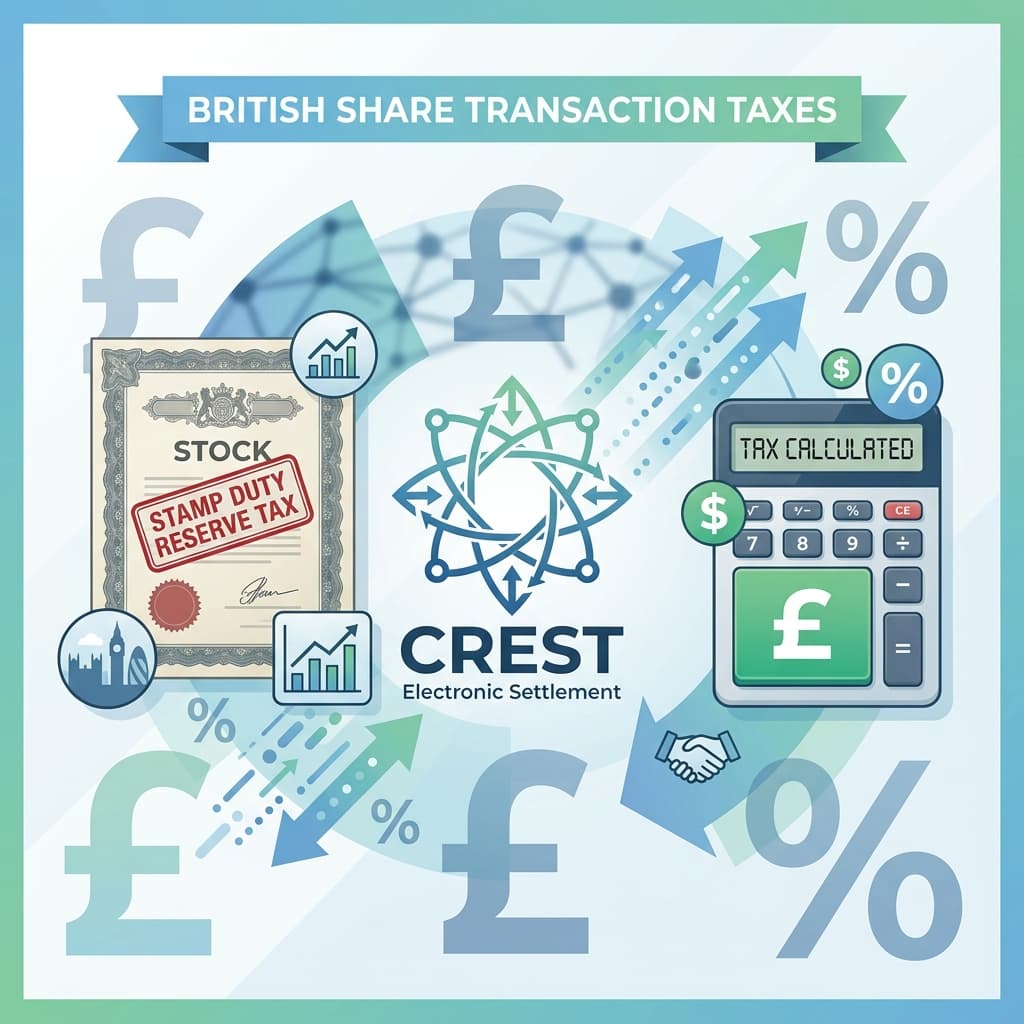
If you buy shares in a UK-listed company, you'll almost always pay Stamp Duty Reserve Tax (SDRT) at a flat rate of 0.5% of what you pay for the shares. There are no bands, no sliding scale, and (for electronic trades) no minimum threshold — buy £200 or £20,000 of shares and the rate is the same. Selling shares, buying funds/ETFs, and buying newly issued shares are usually free of this charge.
At CalZone, we believe that mapping out transaction fees is crucial to optimizing investment yields. This guide covers the details: how the tax is charged, when it doesn't apply, what it actually costs in practice, and what's changing under the new Securities Transfer Tax.
What Is Stamp Duty on Shares, Exactly?
"Stamp duty on shares" is shorthand for two related UK taxes that do the same job in slightly different ways:
- Stamp Duty Reserve Tax (SDRT) — charged on electronic share purchases settled through CREST, the UK's electronic settlement system. This is the version almost every retail investor pays today.
- Stamp Duty — the older, paper-based version, charged when a physical stock transfer form is used to move shares.
Both are charged at the same headline rate. For anyone using a modern share-dealing account, SDRT is the one that matters. It applies automatically at the point of settlement — you don't fill in a form or send HMRC a cheque yourself.
How Much Is Stamp Duty on UK Shares?
The core number to remember is 0.5%.
| Trade Type | Rate | Who Pays |
|---|---|---|
| Electronic purchase of UK shares (SDRT) | 0.5% of consideration | Buyer |
| Paper stock transfer over £1,000 (Stamp Duty) | 0.5%, rounded up to nearest £5 | Buyer |
| Selling shares | 0% | N/A |
| Buying new shares issued by a company (IPO/placing) | 0% | N/A |
| Buying UK-listed ETFs, OEICs, and most unit trusts | 0% | N/A |
| AIM shares | 0% (exempt since April 2014) | N/A |
Unlike Stamp Duty Land Tax on property (which you can check on the Stamp Duty Calculator), there's no tiered structure here — no 0% up to one amount and a higher rate above it. Whatever you spend on qualifying shares, 0.5% of that amount is due.
Worked Examples
- Buy £500 of shares electronically → £2.50 SDRT
- Buy £2,000 of shares electronically → £10.00 SDRT
- Buy £10,000 of shares electronically → £50.00 SDRT
- Buy £10,000 of shares via a paper stock transfer form → £50.00, rounded up to the nearest £5 (no rounding needed here)
Because the rate is flat, the maths scales in a straight line: whatever you invest, you can work out the tax by multiplying by 0.005. You can calculate capital gains thresholds using the Capital Gains Tax Calculator or plan your savings schedule using the Savings Calculator UK.
The £1,000 Threshold — and Why It Rarely Helps Traders
There's a common source of confusion here. The £1,000 threshold only applies to paper Stamp Duty, not to SDRT. If you buy existing shares for £1,000 or less using an old-style paper stock transfer form, there's normally no Stamp Duty to pay at all.
But almost nobody trades on paper anymore. If you buy shares through an online broker, the trade settles electronically through CREST — which means SDRT applies from the very first pound, with no £1,000 exemption. Buy £50 of shares electronically and you still owe 25p in SDRT.
What's Exempt From Stamp Duty on Shares?
Several types of transaction fall outside the 0.5% charge entirely:
- Selling shares — stamp taxes on shares are a buyer's cost only.
- New share issues — buying shares directly from a company at an IPO or rights issue.
- AIM-listed shares — exempt since 2014, which is one reason AIM is often used for tax-efficient investing.
- Most exchange-traded funds, unit trusts, and OEICs — because you're buying units in a fund structure rather than a direct transfer of company shares.
- Shares in non-UK companies settled outside the UK.
If you are investing inside a tax-sheltered account, check our Stocks & Shares ISA Calculator or understand tax allowances with our Personal Allowance 2026/27 Guide.
How Stamp Duty Fits Into Your Total Trading Costs
SDRT is one of several costs layered onto a share purchase:
- SDRT — 0.5% of the purchase value on qualifying UK shares.
- Broker/platform commission — a flat fee or percentage charged by your broker.
- The PTM Levy — a small flat fee (currently £1) applied to trades over £10,000.
- The bid-offer spread — the gap between the buying and selling price.
Of these, SDRT is usually the largest single line item on a mid-sized trade. You can calculate interest returns on your remaining capital using our Compound Interest Calculator or budget your monthly expenditures with the Budget Calculator.
What's Changing: The New Securities Transfer Tax
In July 2026, HMRC published draft legislation for a Securities Transfer Tax (STT), intended to merge Stamp Duty and SDRT into one self-assessed, digitally administered tax. The headline 0.5% rate is expected to stay the same — this is a modernisation of how the tax is reported and collected, not a rate change. The government is aiming to bring the new regime in from 2027.
If you're building an investing habit and want the running cost of stamp duty factored into your decisions, check our Capital Gains Tax Calculator Guide or view details on the Dividend Tax Calculator to ensure you maintain maximum net yields.
Written by Sulzax
Expert writer and contributor at CalZone, specialized in creating accurate tools and simple guidelines for UK readers.
iSources & References
Stocks & Shares ISA Calculator
Estimate your ISA growth, yields, and calculate tax allowance savings.
Open Calculator FreeExplore CalZone's Free Specialist Calculators
Plan your finances, property renovations, health goals, and daily commute with our 300+ free UK tools.