
UK Road Tax 2026: How Much Will You Pay by Vehicle Type?
Road tax has changed significantly over the past two years, with electric vehicles now paying VED for the first time and rates rising across nearly every band. Here is exactly what you will pay in 2026.
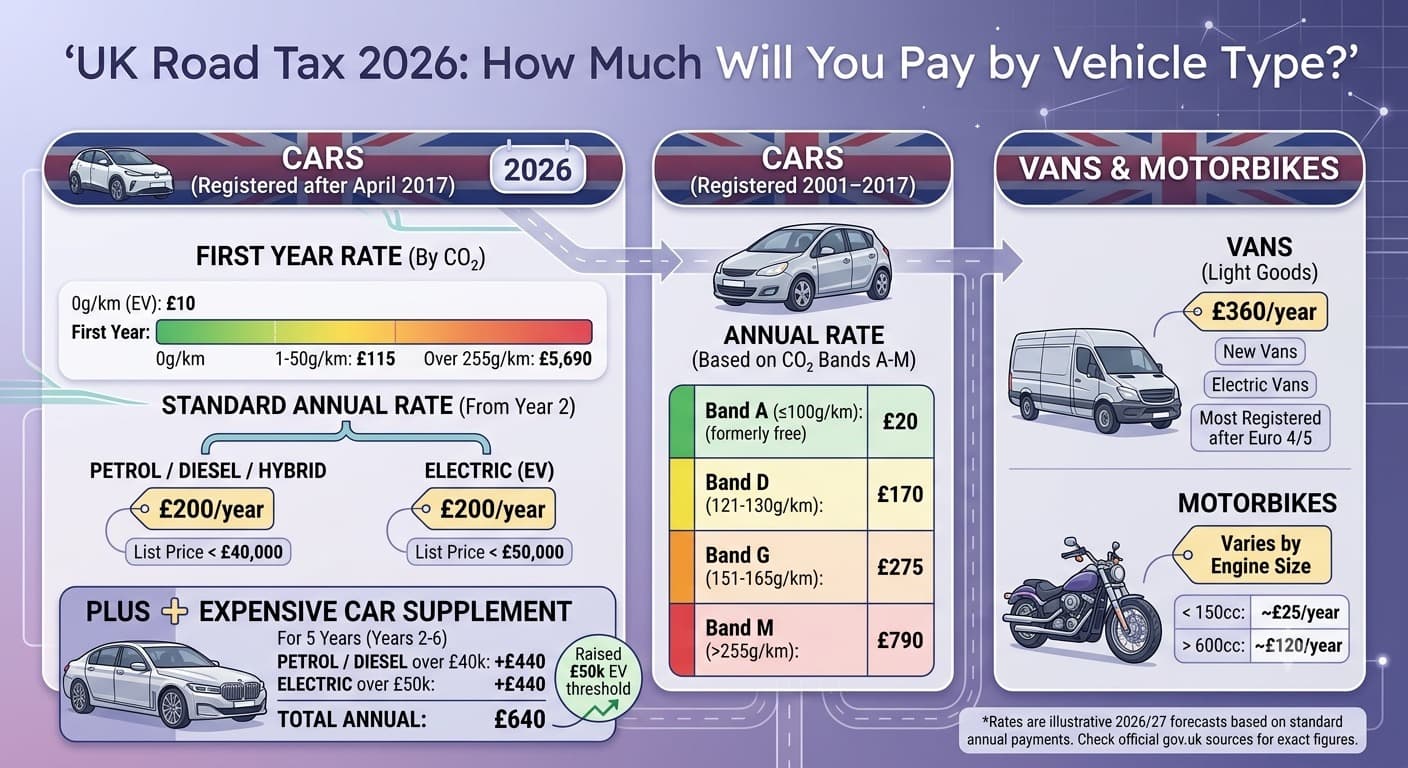
From 1 April 2026, the standard rate of UK road tax (Vehicle Excise Duty, or VED) is £200 a year for most cars registered after April 2017, up from £195. New cars pay a one-off first-year rate based on CO2 emissions, ranging from £10 for zero-emission vehicles to £5,690 for the highest emitters. Cars costing over £40,000 (£50,000 for electric cars) when new pay an extra £440 a year for five years, taking the total to £640. Motorcycles are taxed separately by engine size, from £27 to £125 a year.
Here's exactly what you'll pay in 2026, broken down by vehicle type. If you want a quick, personalised figure for your own vehicle, you can use CalZone's free road tax calculator.
The Short Version: Road Tax at a Glance (2026)
| Vehicle Type | What You Pay |
|---|---|
| Standard rate (cars registered after April 2017, year 2 onwards) | £200/year |
| Electric cars — first year (registered from April 2026) | £10 |
| Electric cars — standard rate (year 2 onwards) | £200/year |
| Expensive car supplement (list price over £40,000 / £50,000 for EVs) | +£440/year for 5 years (total £640/year) |
| Motorcycles | £27–£125/year, depending on engine size |
| Highest CO2 petrol/diesel cars — first year only | Up to £5,690 |
How UK Road Tax Actually Works
For cars registered on or after 1 April 2017, VED works in two stages:
- 1. First-year rate ("showroom tax") — a one-off charge based on your car's official CO2 emissions figure, paid when the car is first registered. This is usually built into the on-the-road price by the dealer.
- 2. Standard rate — a flat annual rate that applies from the second year of registration onwards, currently £200 for 2026/27, regardless of fuel type or emissions.
Cars registered before April 2017 are taxed differently — either on CO2 emissions bands (for cars registered March 2001–March 2017) or on engine size (for cars registered before March 2001). More on this below.
First-Year Rates by CO2 Emissions (2026/27)
| CO2 Emissions (g/km) | First-Year Rate |
|---|---|
| 0 (electric) | £10 |
| 1–50 (most plug-in hybrids) | £115 |
| 51–75 | £135 |
| 76–90 | £280 |
| 91–100 | £365 |
| 101–110 | £405 |
| 111–130 (typical family car) | £455 |
| 131–150 | £560 |
| 151–170 | £1,410 |
| 171–190 | £2,270 |
| 191–225 (large SUVs) | £3,420 |
| 226–255 | £4,850 |
| Over 255 (performance cars) | £5,690 |
Diesel cars that don't meet the RDE2 emissions standard are charged at the rate for the next CO2 band up. After this first-year payment, every car moves to the £200 standard rate from year two onwards.
Electric Vehicles: The Biggest Change to Road Tax
Electric vehicles stopped being exempt from VED from 1 April 2025, and 2026 is the first full tax year under the new rules for many EV owners. Here's how it works:
- New electric cars registered from 1 April 2026 pay a first-year rate of £10, then move to the £200 standard rate from year two onwards.
- Electric cars registered between March 2017 and March 2026 pay the £200 standard rate when they renew in 2026/27.
- The expensive car supplement threshold for electric cars rose to £50,000 from 1 April 2026 (up from £40,000), meaning only pricier EVs are affected.
The Expensive Car Supplement Explained
If a car's list price was over £40,000 when new (£50,000 for zero-emission cars), it attracts an additional £440 a year on top of the standard rate, for five years — from the second time the car is taxed to the sixth. This takes the annual total to £640 during that period.
Worked example (Petrol): A petrol car with a £45,000 list price and CO2 emissions of 120g/km would pay:
- Year 1: £455 (first-year rate for 111–130g/km band)
- Years 2–6: £640/year (£200 standard rate + £440 supplement) = £3,200 over five years
- Year 7 onwards: £200/year, once the supplement ends
Worked example (EV): An electric car with a £55,000 list price would pay:
- Year 1: £10
- Years 2–6: £640/year (since it's over the £50,000 EV threshold) = £3,200 over five years
- Year 7 onwards: £200/year
An identical EV priced at £45,000 — under the £50,000 threshold — would simply pay £10 in year one and £200 a year from year two, avoiding the supplement entirely.
Motorcycle Road Tax Rates (2026)
| Engine Size | Annual Rate |
|---|---|
| Not over 150cc | £27 |
| 151cc–400cc | £59 |
| 401cc–600cc | £90 |
| Over 600cc | £125 |
Electric motorcycles and tricycles are taxed at the same rate as the smallest engine-size band — currently £27 a year. A 650cc motorcycle, for example, falls into the "over 600cc" band and would pay £125 a year, while a 125cc learner bike pays just £27.
Road Tax for Older Vehicles
- Cars registered between March 2001 and March 2017: Taxed in 13 CO2-based bands (A to M), with annual rates for 2026/27 ranging from around £20 (Band A, up to 100g/km) up to £790 (Band M, over 225g/km).
- Cars registered before March 2001: Taxed on engine size alone: a flat annual rate applies for engines up to 1549cc, and a higher flat rate for engines over 1549cc.
- Vehicles over 40 years old: Qualify for a rolling historic vehicle tax exemption — for 2026, this covers vehicles built before 1986. You'll still need to register the vehicle as tax-exempt, but no payment is due.
What's Changing Next: Pay-Per-Mile for EVs from 2028
The government has confirmed plans for a new Electric Vehicle Excise Duty (eVED) — a pay-per-mile charge for electric and plug-in hybrid vehicles, due to start in April 2028, on top of the standard annual VED rate. Based on government estimates, an average EV driver covering around 8,000 miles a year would pay roughly £240 extra annually under the proposed system. Odometer verification will most likely be done at the annual MOT.
How to Pay Your Road Tax
- Road tax can be paid annually, in six-monthly instalments (at a 10% premium), or by monthly Direct Debit.
- Since 2014, tax discs are no longer issued — the DVLA and police check VED status electronically via your number plate.
- You can check whether a vehicle is taxed using the DVLA's vehicle tax checker with just the registration number.
- If you're not using your vehicle on public roads, you can declare a Statutory Off Road Notification (SORN) to pause your tax and insurance requirements.
- Driving an untaxed vehicle can result in a fine starting at £80, rising to as much as £1,000 and possible prosecution.
Checking Your Own Vehicle's Road Tax
Because your exact VED rate depends on your vehicle's registration date, fuel type, CO2 emissions, and original list price, the fastest way to get an accurate figure is to check your V5C logbook for the relevant details or use CalZone's road tax calculator — one of a wide range of free UK automotive and finance calculators available at calzone.co.
This guide reflects UK Vehicle Excise Duty rates confirmed for 2026/27 (effective from 1 April 2026). Rates and thresholds are set by the government and can change at future fiscal events. It's provided for general information only and doesn't constitute tax advice — check your exact VED rate using your V5C logbook details or the DVLA's official vehicle tax checker before budgeting.
Common Questions
How much is UK road tax in 2026?
Most cars registered after April 2017 pay the £200 standard rate from their second year onwards. New cars pay a first-year rate based on CO2 emissions, ranging from £10 for zero-emission vehicles to £5,690 for the highest emitters.
Do electric cars pay road tax in 2026?
Yes. Since 1 April 2025, electric vehicles are no longer exempt from VED. New EVs registered from April 2026 pay £10 in the first year, then the £200 standard rate from year two onwards, the same as petrol and diesel cars.
What is the expensive car supplement?
Cars with a list price over £40,000 when new (£50,000 for electric cars) pay an extra £440 a year on top of the standard rate, for five years starting from the second time the car is taxed — bringing the annual total to £640.
How much is motorcycle road tax in the UK?
Motorcycle VED is based on engine size, ranging from £27 a year for engines up to 150cc to £125 a year for engines over 600cc. Electric motorcycles pay the same rate as the smallest engine-size band.
Is road tax going up further in the future?
Yes. From April 2028, the government plans to introduce a pay-per-mile charge (eVED) for electric and plug-in hybrid vehicles, on top of the standard VED rate, estimated to add around £240 a year for an average EV driver covering 8,000 miles.
Are older or classic cars exempt from road tax?
Vehicles over 40 years old qualify for a rolling historic vehicle tax exemption — in 2026, this covers vehicles built before 1986. You still need to register the vehicle as tax-exempt, but no payment is required.
Written by Sulzax
Expert writer and contributor at CalZone, specialized in creating accurate tools and simple guidelines for UK readers.
iSources & References
Road Tax Calculator UK
Want to calculate your vehicle's exact VED rate instantly? Use our free Road Tax Calculator UK.
Open Calculator FreeExplore CalZone's Free Specialist Calculators
Plan your finances, property renovations, health goals, and daily commute with our 300+ free UK tools.