
Roof Insulation Costs 2026
The most cost-effective way to lower your energy bills is through your roof. In 2026, with energy prices remaining high, upgrading your insulation is no longer optional—it's a financial necessity.
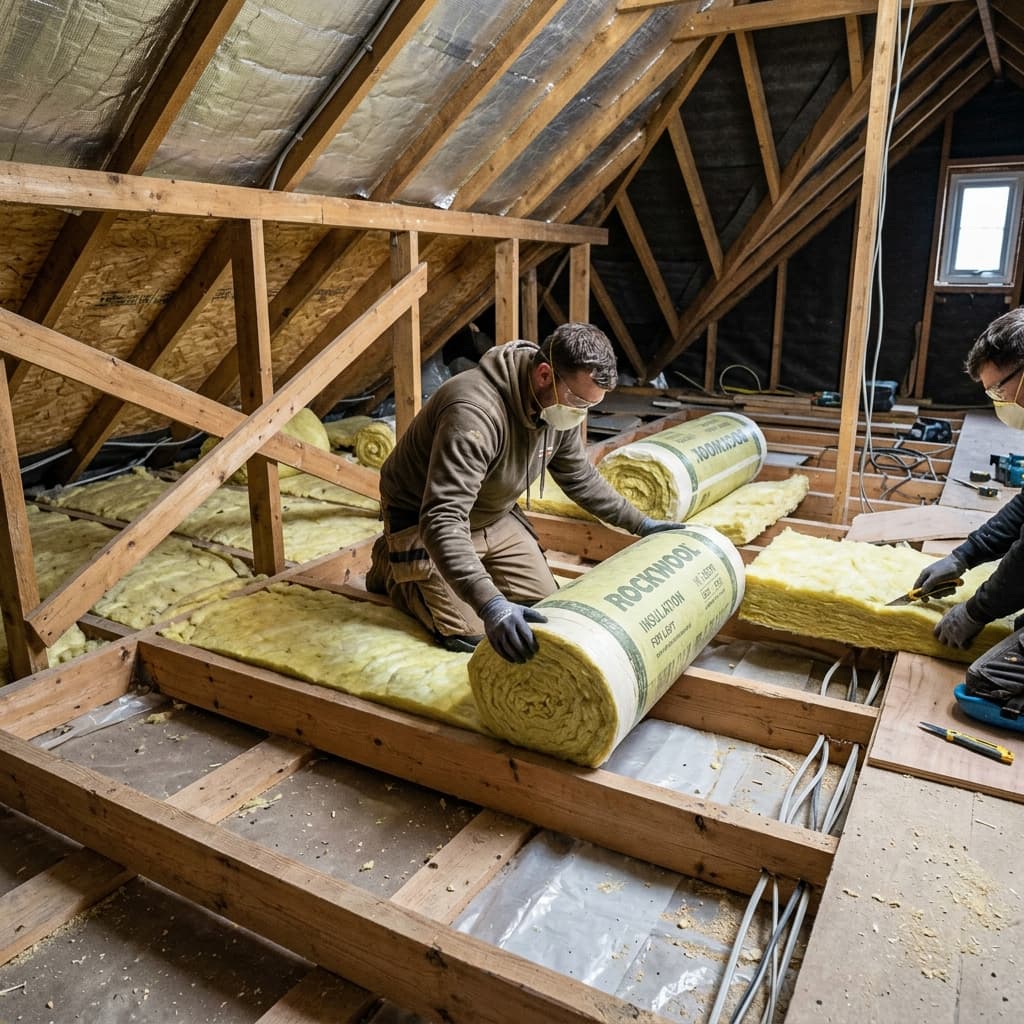
Project Estimates (2026)
Professional Install (3-Bed Semi)
DIY Material Cost (per m²)
*Includes 270mm mineral wool or 150mm high-performance PIR board. DIY costs exclude safety equipment and labor.
Energy Bill ROI
Properly insulating an empty loft is the #1 home improvement for return on investment.
At current 2026 rates, a professional loft insulation install pays for itself in just 1.8 years.
The "Airflow" Rule
Eaves Gap (50mm)
You must leave a 50mm gap between the insulation and the roof eaves. This allows air to circulate from the soffits, preventing timber rot.
2026 U-Value Target
Building Regs Part L mandates a maximum U-value of 0.16 W/m²K for new and replacement roofs.
Avoid "Over-Insulating"
It sounds counter-intuitive, but too much insulation without proper ventilation can be dangerous. It traps moisture-laden air inside the house, which then condenses on the cold side of the roof structure. Always ensure your roof has breathable felt or adequate ridge/soffit vents.
Fire Resistant
Mineral wool is non-combustible and helps slow the spread of fire in your home.
PAS 2035 Standard
Ensure your contractor works to PAS 2035—the UK standard for high-quality energy retrofits.
Storage Boarding
Use 'Loft Legs' to raise your floor boards above the 270mm insulation to prevent compression.
Insulation FAQ
See Your Energy Savings
Use our calculator to see how much a 2026 insulation upgrade will add to your roofing project and how quickly it will pay for itself.